In the late 1990s, when electronic music was evolving into something more expressive and experimental, a unique voice emerged—bold, unconventional, and impossible to ignore. Róisín Murphy wasn’t just another artist stepping into the scene; she was redefining what it meant to blend music, fashion, and identity into one striking presence.
Her breakthrough moment came with “Sing It Back”, released with the duo Moloko. What started as a relatively understated track quickly transformed into a global phenomenon after being remixed into a hypnotic, club-driven anthem. Suddenly, the song was everywhere—dance floors, radio waves, and late-night playlists—pulling listeners into its irresistible rhythm.

There’s something almost magnetic about “Sing It Back.” It doesn’t rush. It builds. The groove is smooth, repetitive in the best way, creating a trance-like atmosphere where time seems to blur. And then comes her voice—cool, confident, slightly distant, yet deeply captivating. It doesn’t demand attention; it draws you in.
Lyrically, the song carries a subtle emotional tension. It’s not loud or overly dramatic, but it hints at longing, miscommunication, and the desire to be heard. The phrase “sing it back to me” becomes more than just a line—it feels like a request for connection, for validation, for something real beneath the surface of the music.
What makes Róisín Murphy stand out is not just her voice, but her artistic identity. Throughout her career, she has embraced creativity without limits—experimenting with sound, visuals, and style in ways that constantly challenge expectations. She doesn’t follow trends; she reshapes them.
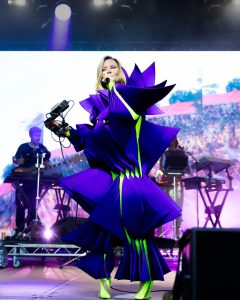
“Sing It Back” remains one of those rare tracks that never truly fades. It continues to resurface across generations, whether through DJ sets, fashion shows, or viral moments online. Its energy feels timeless—both nostalgic and fresh at the same time.
More than just a club hit, the song represents a moment when music became a feeling you could step into. A rhythm you could lose yourself in. A voice you didn’t just hear—you experienced.
Because some songs aren’t meant to be understood…
they’re meant to be felt. 🎶