Old School Music
The Song That Was Almost Cut From the Movie
Some of the most unforgettable songs in music history almost never make it to the audience. This one came surprisingly close.
In 1973, Barbra Streisand was starring alongside Robert Redford in The Way We Were, a romantic drama about two people whose love survives even as their lives pull them in different directions. The movie needed a song that could capture the sadness of remembering a relationship that could not last.
Composer Marvin Hamlisch was given the job.
He wanted the music to carry the feeling of the story without simply repeating what the characters were saying on screen. He later explained that he was trying to capture the sorrow, frustration, longing, and complicated nature of the relationship.
Then came the melody.
Hamlisch later recalled being inspired by something surprisingly ordinary: bells he heard while visiting a college campus connected with the production. He began shaping those sounds into the opening of what would become the song’s famous melody.
But music alone wasn’t enough.
Alan and Marilyn Bergman were brought in to write the lyrics. The husband-and-wife songwriting team had already established themselves as major Hollywood songwriters, and they worked with Hamlisch to turn the melody into something that felt like a memory of a relationship rather than a simple love song.
Their first version began with the words “Daydreams light the corners of my mind.”
It was Streisand who suggested changing that opening.
She thought “Memories” was stronger.
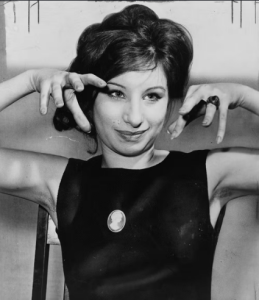
That single change helped define the entire song. The Library of Congress preserved the early handwritten lyrics, showing the original “daydreams” being changed to “memories.”
And then something even more important happened.
The song was almost left out of the movie.
According to Hamlisch, the original cut of The Way We Were did not use the song in its final scene. When the film was screened, the audience reaction was disappointing. Hamlisch believed the scene needed the music, and he pushed the studio to let him try again.
He got his chance.
The final scene was rescored with Streisand’s song.
The reaction changed dramatically.
Hamlisch recalled hearing people in the audience begin to cry. What had previously felt emotionally flat suddenly carried the weight he believed the scene needed.
The song stayed.
And then Streisand took it into the recording studio.
The movie version was intentionally restrained and reflective. But the version intended for radio needed something different. Producer and arranger Marty Paich reworked the arrangement to give the song more movement and make it work as a standalone record.
The recording session itself was intense.
Session musician Carol Kaye later recalled doing 33 takes of the song with Streisand. Hamlisch conducted while the large orchestra worked through the arrangement again and again.
The single was released in September 1973.
Then it started climbing.
On February 2, 1974, it reached No. 1 on the Billboard Hot 100, giving Streisand her first No. 1 single. It remained on the chart for 24 weeks and spent three weeks at the top.
But the story didn’t end with the charts.
The song became inseparable from the movie itself.
It captured something that people who have lived through relationships, separations, and lost opportunities immediately understood: sometimes the memories of a relationship can remain beautiful even when the relationship itself is over.
That is what makes the song feel different as the years pass.
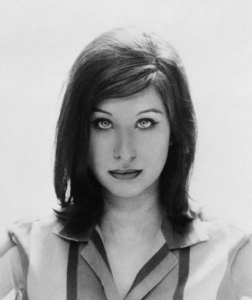
When you’re young, it can sound like a beautiful movie ballad.
Later in life, the same words can suddenly feel personal.
The song went on to win the Academy Award for Best Original Song. Hamlisch also won the Oscar for his score to the film, while the song later earned the Grammy Award for Song of the Year.
And perhaps the most remarkable part is how close the world came to never hearing it in the movie at all.
If Hamlisch had accepted the first screening’s reaction, the song might have remained just another piece of music written for a film.
Instead, he fought to put it where he believed it belonged.
The audience finally heard it.
And decades later, those first words still have the power to bring people back to another time in their lives.
Sometimes a song doesn’t remind you of a movie.
It reminds you of someone.