
Old School Music
The Song That Failed — Until Someone Changed It Without Them Knowing
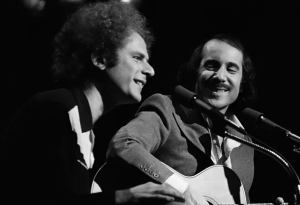
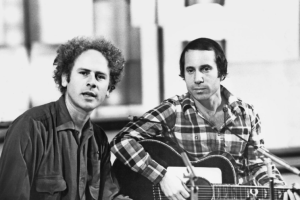
When Paul Simon and Art Garfunkel recorded this song in 1964, there was no reason to believe they had just created a future classic.
They were still trying to establish themselves.
The song was quiet.
Acoustic.
Almost hauntingly simple.
Simon sang while playing guitar, with Garfunkel’s voice providing the harmony.
But when their debut album came out later that year, almost nobody was listening.
The album sold poorly.
The song disappeared.
And before long, Simon and Garfunkel had gone their separate ways.
Simon moved to England.
Garfunkel returned to school.
It looked like the story might already be over.
But then something happened behind their backs that would completely change the future of both musicians.
Paul Simon had written the song in 1963, during a period when he was experimenting with songwriting and performing.
The original recording was deliberately sparse.
There was no pounding drumbeat.
No electric guitar.
No big production.
Just Simon’s acoustic guitar, his voice and Garfunkel’s harmony.
The lyrics were unusually dark and introspective for a pop song of the era, describing isolation and the difficulty of communicating in a world filled with people.
The song eventually became part of Simon & Garfunkel’s debut album, Wednesday Morning, 3 A.M., released in October 1964.
But the album didn’t take off.
It sold poorly enough that the young duo effectively broke apart.
Garfunkel went back to Columbia University.
Simon returned to England, where he performed in small clubs and worked on his solo career.
Neither man knew that their failed song was about to get another chance.
The music industry was changing rapidly.
Folk music was beginning to merge with rock.
The Byrds were having enormous success with electric instruments.
Bob Dylan had also demonstrated that acoustic songwriting could be transformed by a full electric backing band.
Columbia producer Tom Wilson recognized what was happening.
He already had experience combining folk songwriting with rock instrumentation. In fact, he had been involved with Bob Dylan’s sessions, including the landmark recording of “Like a Rolling Stone.”
And Wilson remembered Simon & Garfunkel’s forgotten song.
He went back to the original recording.
Then he made a decision that would change music history.
He didn’t call Simon.
He didn’t call Garfunkel.
He didn’t ask them to come back into the studio.
Instead, he took their existing recording and added musicians to it.
Wilson brought in electric guitar, electric bass and drums and overdubbed them onto the original acoustic recording.
The singers’ original performances remained.
But suddenly, the quiet folk song had become something much bigger.
It had a beat.
It had electricity.
It had the sound of the new folk-rock movement.
And the strangest part?
Simon and Garfunkel weren’t there.
The Library of Congress specifically notes that Wilson made the overdubs without the duo’s knowledge.
It was an extraordinary gamble.
The original recording had failed.
Wilson was essentially betting that the same song, dressed in a completely different sound, could succeed.
And this time, radio listeners noticed.
The newly electrified version began receiving airplay in 1965.
Radio stations in places including Boston and Florida started picking it up.
The response was strong enough that Columbia decided to release the new version as a single.
Simon was still in England when he discovered what was happening.
According to accounts of the story, he learned that the song was appearing on the Billboard chart while reading the magazine during his time overseas.
Think about that for a second.
He had written the song.
He had recorded it.
His album had failed.
His duo had split up.
And now he was discovering that someone had taken the recording, changed it and turned it into a hit.
Without him being part of the process.
The gamble worked.
The electrified recording climbed the Billboard Hot 100.
And in January 1966, it reached No. 1.
Suddenly, the two musicians who had already gone their separate ways had a massive hit on their hands.
There was only one problem.
They now had to figure out what to do next.
The success of the new version effectively forced Simon and Garfunkel back together.
They returned to the studio and began recording the album Sounds of Silence, building a new folk-rock sound around the unexpected success of the single.
Their careers had been resurrected by a recording neither of them had planned.
There’s even a small detail in the history that people often miss.
The original recording was released under the title “The Sounds of Silence.”
After the electrified version became a hit, the title became “The Sound of Silence.”
The follow-up album was titled Sounds of Silence.
So even the name evolved alongside the recording.
The Library of Congress documents that evolution as part of the song’s unusual journey from forgotten album track to major hit.
The success of the song changed everything for Simon & Garfunkel.
They went from a duo whose first album had essentially failed to one of the most important musical partnerships of the 1960s.
They followed it with songs like “Homeward Bound,” “I Am a Rock,” “Mrs. Robinson,” “Bridge Over Troubled Water” and many others.
But it all traces back to that strange moment in 1965 when Tom Wilson looked at a forgotten acoustic recording and decided to try something completely different.
Without that decision, the history of Simon & Garfunkel might have been completely different.
The story didn’t stop with the No. 1 single.
“The Sound of Silence” continued appearing in films, television and other cultural moments for decades.
Its use in the 1967 film The Graduate helped connect the song with another generation and reinforced its reputation as one of the defining recordings of the era.
And eventually, the song became much bigger than the circumstances surrounding its original release.
What had once been a quiet folk recording became a defining example of folk-rock.
The Library of Congress later selected the recording for the National Recording Registry, recognizing its cultural, historical and artistic importance.
There’s something almost unbelievable about the whole story.
The original version wasn’t a failure because the songwriting was bad.
The song simply arrived at the wrong moment.
The world was changing.
Rock was getting louder.
Folk music was becoming electric.
And Tom Wilson heard something in Simon’s quiet recording that Simon and Garfunkel hadn’t yet realized themselves.
So he changed it.
Today, the electric version is the one most people know.
That driving rhythm.
Those electric guitars.
That haunting harmony.
That unmistakable opening.
But underneath all of it is the original recording made by two young musicians who had no idea what their song would eventually become.
They thought they had made a quiet folk song.
The record company thought it could become something else.
And somehow, both versions became part of the story.
More than 60 years later, “The Sound of Silence” remains one of the most recognizable songs of its era.
And perhaps the craziest part is still the simplest:
The version that became a classic was created after the duo had already given up on the song.
Someone else heard potential in a recording everyone else had forgotten.
They changed it.
And the rest is music history.