
Old School Music
The Song That Changed Rock Music Forever
In 1991, a relatively obscure band from Seattle walked into a recording studio with a song that even its own members weren’t completely sure about.
A few months later, that song would become one of the defining recordings of the 1990s.
And eventually, it would be ranked No. 5 on Rolling Stone’s 2021 list of the 500 greatest songs of all time.
The song was “Smells Like Teen Spirit.”
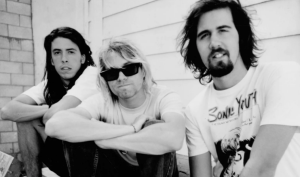
But its beginning was much less glamorous than its eventual reputation.
Nirvana had been rehearsing new material in a converted barn in Tacoma, Washington, after drummer Dave Grohl joined the band. They were writing constantly, sometimes forgetting songs almost as quickly as they created them, so they started recording rough ideas on a cheap boombox.
One of those recordings was sent to producer Butch Vig.
The cassette sounded terrible.
Vig could barely make out what the band was playing.
But underneath all that distortion, he could hear something.
A riff.
A melody.
And a song that sounded enormous.
When Nirvana finally played it for him during rehearsals, Vig was blown away. He later recalled literally pacing around the room because of how powerful the song sounded.
The song itself had been built around a relatively simple guitar progression.
Kurt Cobain had been inspired by the Pixies’ quiet-loud dynamic, wanting to create something that combined punk aggression with a massive pop hook. He reportedly described his goal as writing the “ultimate pop song.”
And then there was the title.
“Smells Like Teen Spirit.”
It sounds like it was carefully chosen to represent teenage rebellion.
It wasn’t.
Cobain had been hanging out with his friend Kathleen Hanna, the singer of Bikini Kill. They had been drinking and writing graffiti, and Hanna wrote “Kurt smells like Teen Spirit” on a wall.
Cobain thought she meant that he had some kind of rebellious, revolutionary spirit.
He didn’t realize she was referring to Teen Spirit deodorant.
He only learned the joke after the song had already been written.
That accidental misunderstanding gave one of the most famous songs in rock history its name.
The lyrics themselves were deliberately difficult to pin down.
Cobain wasn’t trying to write a straightforward story.
The song mixed sarcasm, teenage boredom, rebellion, confusion and fragments of imagery into something that felt more like a mood than a traditional narrative.
And somehow, that ambiguity became part of its power.
Then came the recording.
Nirvana, Vig, and engineer/mixer Andy Wallace worked on Nevermind at Sound City Studios in California in 1991. Vig helped shape the song’s arrangement, including tightening the chorus and shortening the guitar solo so the track would keep building toward its explosive release.
But here’s one of the craziest parts.
Nobody really knew what was about to happen.
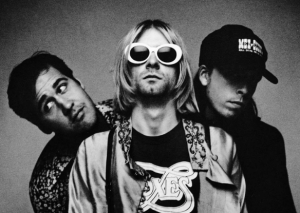
Nirvana’s label and management initially expected “Come as You Are” to be the bigger single.
“Smells Like Teen Spirit” was released with relatively modest expectations, particularly through alternative and college radio.
Instead, listeners reacted almost immediately.
The song exploded.
MTV began playing the video heavily.
And Nirvana suddenly found itself at the center of a cultural earthquake.
Their official timeline notes that by November 1991, as Nirvana embarked on a European tour, “Nirvanamania” was sweeping across the United States, with MTV airing the “Smells Like Teen Spirit” video constantly and the song being hailed as an anthem for a generation.
Nevermind eventually reached No. 1 on the Billboard 200 in January 1992.
The alternative rock scene that had existed largely outside the mainstream had suddenly become mainstream.
And Nirvana was at the center of it.
The music industry changed.
The fashion changed.
MTV changed.
The sound of American rock changed.
And a band that had once been part of Seattle’s underground scene was suddenly playing to enormous audiences.
But Cobain wasn’t completely comfortable with what happened.
He didn’t see himself as a spokesman for an entire generation.
And he eventually became frustrated by how heavily the song dominated Nirvana’s identity.
He knew they had written other songs he considered just as good, perhaps better.
Yet the song had already escaped.
It belonged to the world now.
And its reputation only grew.
In 2001, it appeared on the Recording Industry Association of America’s Songs of the Century list.
In 2013, Kerrang! ranked it the greatest single ever.
And in 2021, Rolling Stone placed it at No. 5 on its list of the 500 greatest songs of all time.
That’s an extraordinary journey for a song that began as a rough recording on a cheap cassette.
A song whose title came from a misunderstanding.
A song whose lyrics were intentionally chaotic.
A song that its own creators didn’t initially realize would become a cultural phenomenon.
And yet somehow, that confusion was exactly what made it work.
It captured something difficult to put into words:
the feeling of being young, angry, bored, confused, and desperate to belong while simultaneously wanting to destroy everything around you.
More than three decades later, the opening guitar still hits like a fucking explosion.
And that little song from Seattle?
It didn’t just become a hit.
It helped change the direction of popular music.