
Old School Music
The Song That Began With a Mystery Even Its Writer Couldn’t Explain
He wrote one of the most heartbreaking songs ever recorded—and for months, he was convinced he’d heard it somewhere before.
The melody seemed so complete that he couldn’t believe he had created it himself.
He had no finished lyrics.
He didn’t even have a proper title.
But that strange little melody would eventually become one of the most recognizable songs in music history.
It Started With a Melody
Paul McCartney was working on music in 1964 when a melody suddenly came to him.
He later described the experience as something that seemed to arrive almost fully formed. In a 2010 Library of Congress appearance, McCartney said the song came to him in a dream and described the writing process as a mysterious one.
But there was a problem.
McCartney was convinced he had heard the melody before.
It sounded too familiar.
So instead of immediately claiming it as his own, he began asking people whether they recognized it.
He wanted to make absolutely sure he hadn’t accidentally remembered another songwriter’s work.
For a while, he couldn’t find an answer.
The melody remained his—but the question stayed with him.
Where had it come from?
The Song Had a Completely Different Name
There was another problem.
McCartney didn’t yet know what the lyrics would be.
So he used temporary words.
And those words were almost hilariously different from the final song.
The working title was “Scrambled Eggs.”
McCartney even joked about the temporary lyrics years later during his Library of Congress Gershwin Prize appearance.
The melody was already beautiful.
But the words were nonsense.
That didn’t matter yet.
McCartney had the hardest part—the musical idea.
Now he needed to figure out what the song was actually about.
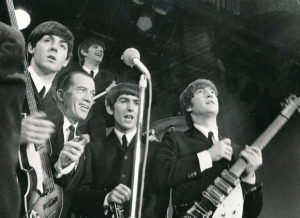
The Lyrics Changed Everything
Eventually, McCartney developed the lyrics that transformed the mysterious melody into a deeply emotional song about regret, separation, and longing.
The finished lyrics were simple.
There was no complicated story to follow.
Instead, the song captured a feeling almost everyone could understand: looking back at a relationship or a period of life and wishing things had remained the way they once were.
That emotional simplicity became one of its greatest strengths.
It wasn’t tied to one specific event that listeners had to understand.
People could hear their own memories in it.
Their own regrets.
Their own “yesterdays.”
And that helped make the song feel personal to millions of people.
The Beatles Didn’t Record It Like a Typical Beatles Song
When it was time to record the song, something unusual happened.
McCartney recorded it essentially by himself.
The other Beatles did not play on the finished recording.
Instead, a string quartet was brought in to accompany McCartney’s acoustic guitar and vocal.
George Martin helped arrange the strings, giving the recording a completely different character from the Beatles’ usual sound.
There was no full rock-band arrangement.
No Ringo Starr drums.
No electric-guitar-heavy performance.
Just McCartney, his guitar, his voice, and the carefully arranged strings.
It was remarkably simple.
And that simplicity was exactly what the song needed.
Even the Beatles’ Name Wasn’t Enough to Explain It
The recording was credited to Lennon–McCartney, following the songwriting partnership used throughout the Beatles’ career.
But the song was overwhelmingly McCartney’s creation.
It was also different enough from the Beatles’ earlier material that it stood out immediately.
This wasn’t a loud rock-and-roll performance.
It wasn’t a playful pop song.
It was quiet.
Personal.
Almost intimate.
And that made it feel unlike anything else the group had released up to that point.
The Library of Congress lists “Yesterday” among the Beatles’ most notable songs and identifies it as part of McCartney’s songwriting legacy.
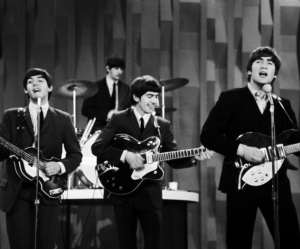
Then the World Heard It
“Yesterday” was released in 1965.
And it didn’t take long for people to recognize that something unusual had happened.
The song became one of the Beatles’ most enduring recordings.
It also became much bigger than the original recording itself.
Other artists began performing it.
Then more artists.
And more.
The song’s melody was simple enough to travel across genres, generations, and countries.
It could be performed with a guitar.
A piano.
A full orchestra.
A small acoustic arrangement.
The emotion remained.
Why Does It Still Feel So Personal?
That’s probably the most remarkable thing about the song.
There isn’t a complicated story explaining exactly what happened.
There isn’t a specific person listeners have to know.
There isn’t even a detailed explanation of who the narrator is talking about.
Instead, the song leaves room for the listener.
That’s why one person can hear it and think about a childhood memory.
Another might think about a relationship.
Someone else might simply remember where they were when they first heard it.
The song gives people enough information to feel something without telling them exactly what they have to feel.
And that’s incredibly difficult to accomplish.
The Mystery Became Part of the Legend
Remember the strange beginning?
McCartney wasn’t even sure the melody was his.
He had to ask people whether they recognized it.
He carried the melody around before he had the finished words.
And for a time, one of the most famous songs in music history was essentially called “Scrambled Eggs.”
Eventually, everything came together.
The melody found its lyrics.
The temporary title disappeared.
The simple acoustic recording found its place in Beatles history.
And a song that began as a musical mystery became a permanent part of popular culture.
More than 60 years later, the opening guitar and vocal are still enough to transport listeners back to another era.
That’s the strange power of a great song.
Sometimes the songwriter knows exactly what he is trying to say.
And sometimes the melody arrives first, with the meaning following afterward.
In this case, Paul McCartney started with a melody he wasn’t even sure belonged to him.
He ended with one of the most recognizable songs ever written.