
Old School Music
The Song Inspired by a Woman Who Dreamed About Her Future Husband
He wrote this song about a woman he couldn’t have—and she had no idea she was the reason behind one of the biggest hits of the 1950s.
Except the real story is even stranger.
The woman wasn’t a secret girlfriend.
She wasn’t a famous actress.
And she wasn’t someone he had been chasing for years.
She was his wife.
And years before they ever met, she had dreamed about him.
A Meeting That Already Felt Familiar
The story begins in Milwaukee in 1945.
Boudleaux Bryant was performing at the Schroeder Hotel when he met a young woman named Matilda Genevieve Scaduto, who worked there as an elevator operator.
She would eventually become known as Felice Bryant.
According to accounts of their relationship, Felice later said that she had dreamed about meeting Boudleaux when she was a child. When she eventually saw him at the hotel, she felt that she recognized him.
It sounds almost like something from a movie.
But the meeting was real.
And the two quickly fell in love.
They eloped only days after meeting.
That remarkable beginning would eventually become part of the inspiration behind one of their most famous songs.
They Became One of Nashville’s Great Songwriting Couples
Boudleaux and Felice Bryant eventually moved into professional songwriting.
They became one of the most successful husband-and-wife songwriting teams of their era.
Together, they wrote songs that would become standards of country, pop, and rock music, including “Bye Bye Love,” “Wake Up Little Susie,” “Love Hurts,” and “Rocky Top.” The Country Music Hall of Fame recognizes the Bryants for their major contribution to American music.
But one particular song was different.
Boudleaux wrote it for Felice.
And its central idea came from the strange circumstances surrounding their own love story.
The Woman Behind the Song
The song imagined the feeling of wanting someone so badly that even when they weren’t physically there, you could still be with them in your dreams.
That idea was especially meaningful for Boudleaux and Felice.
Felice had already described her childhood dream of meeting the man who would eventually become her husband.
So Boudleaux turned that extraordinary part of their story into a simple romantic idea:
If you can’t be with the person you love, you can still see them when you dream.
The result was intimate rather than complicated.
There was no elaborate storyline.
Just longing.
Imagination.
And the idea that love could exist even when the person you wanted wasn’t beside you.
Then the Everly Brothers Heard It
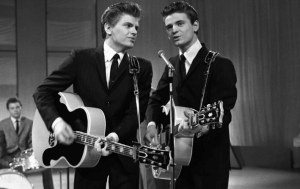
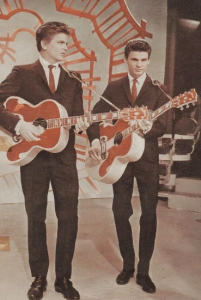
The song eventually made its way to Don and Phil Everly.
By 1958, the brothers were already major stars, thanks in part to earlier Bryant compositions such as “Bye Bye Love” and “Wake Up Little Susie.”
Their harmonies were perfect for this kind of material.
The brothers recorded the song at RCA Studio in Nashville on March 6, 1958.
And remarkably, they needed only two takes.
The recording also featured legendary Nashville guitarist Chet Atkins.
The arrangement was relatively simple.
But the Everly Brothers’ voices were the heart of it.
Their harmonies gave the song a softness that made the romantic lyrics feel almost effortless.
Then It Became Huge
The single was released in 1958.
And it exploded.
It reached No. 1 on the Billboard pop chart, as well as No. 1 on the country and R&B charts. It also topped the British singles chart.
In fact, the record achieved something remarkable for its time: it reached the top of Billboard’s major pop, country, and R&B sales charts simultaneously.
The song had crossed boundaries that were often much harder to cross in the 1950s.
Country listeners loved it.
Pop listeners loved it.
R&B audiences heard it too.
And the Everly Brothers had another enormous hit.
The Song Had a Life of Its Own
What makes the story even more interesting is that the Everly Brothers weren’t the only artists who recorded it.
Over the years, the song was recorded by artists including Bobbie Gentry and Glen Campbell, Richard Chamberlain, Cliff Richard, and others.
But the Everly Brothers’ recording remained the version that defined the song for generations.
Its influence continued long after the original chart run.
The Rock & Roll Hall of Fame included it among its “500 Songs That Shaped Rock and Roll,” and the recording received a Grammy Hall of Fame Award in 2004.
A Love Story Hidden Inside a Hit
There’s something beautiful about the way the story came full circle.
A young woman once said she had dreamed about meeting the man who would become her husband.
Years later, that unusual story became part of the inspiration for a song about longing for someone when they aren’t there.
Then another pair of brothers recorded it.
Millions of people heard it.
And the private love story behind the composition became part of American music history.
The song itself never needed to explain all of that.
You can simply hear two voices singing about wanting someone.
But once you know the story behind it, those words feel a little different.
Because the songwriter wasn’t inventing some completely imaginary romance.
He was writing about a love story that had already begun in a remarkably unusual way.
A chance meeting.
A whirlwind marriage.
A childhood dream.
And eventually, one of the most recognizable romantic songs of the 1950s.
More than six decades later, the Everly Brothers’ harmonies still sound almost impossibly natural.
And perhaps that’s the perfect ending to the story.
A song about wanting someone you can’t physically be with became famous because two brothers made it sound as though love itself could be shared through a simple harmony.
Sometimes the strangest stories are the ones that make the most beautiful songs.