
Old School Music
The Song He Wrote in Ten Minutes — After Thinking He Might Lose the Woman He Loved
Some love songs take months to write.
Some take years.
But one of John Denver’s most beautiful songs came together in about ten minutes—while he was sitting on a ski lift high above the Rocky Mountains.
The incredible part?
It wasn’t written during a perfect moment.
It came after one of the hardest periods in his marriage.
And that makes the story behind “Annie’s Song” even more unforgettable.
By the early 1970s, John Denver’s career was exploding.
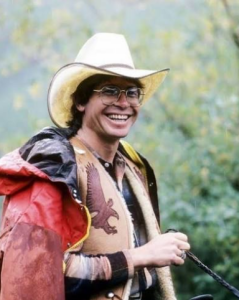
He was becoming one of America’s biggest singer-songwriters, touring constantly and living the kind of life that leaves little room for normal family routines.
His wife, Annie Martell, had been with him long before the fame.
They had married in 1967, and together they had built a life in Colorado.
But success brought pressure.
Long periods apart.
Misunderstandings.
And moments when both of them wondered whether the marriage could survive.
According to Annie herself, they had gone through “a pretty intense time together” before finally beginning to reconnect.
Neither of them knew that one ordinary day in Aspen was about to produce the song that would define their relationship forever.
John often escaped into the mountains when he needed to clear his head.
One day, after their relationship had begun healing, he went skiing on Aspen Mountain.
He had just finished a difficult run.
His heart was racing.
His legs were burning.
Then he stepped onto the Ajax chairlift for the ride back up.
Something changed.
In his autobiography, Denver later described becoming suddenly overwhelmed by everything around him—the fresh air, the blue sky, the snow, the trees and the feeling of being completely alive.
Those images began flowing through his mind.
And somehow, they all led back to Annie.
Denver didn’t sit down with a notebook.
He didn’t spend weeks rewriting lyrics.
Instead, line after line simply appeared while the chairlift carried him toward the top of the mountain.
The entire ride took about ten minutes.
By the time he reached the top, the song was essentially finished in his head.
He later joked that he knew exactly how long it took because the chairlift measured the writing time for him.
Then he did something almost frantic.
He skied straight back down.
Rushed home.
Picked up his guitar.
And wrote it down before it could disappear.
When John played the song for Annie, it became one of those rare moments that neither of them would ever forget.
She later explained that the song wasn’t simply a romantic gesture.
It reflected what they had just survived together.
The difficult conversations.
The uncertainty.
And the realization that their love was stronger than they had feared.
She even described the song as feeling almost like a prayer rather than just a love song.
That’s what makes “Annie’s Song” feel so different from many other romantic ballads.
It wasn’t describing the excitement of falling in love.
It was describing the gratitude of still being in love after almost losing it.
As beautiful as the song sounded, producer Milt Okun noticed something surprising.
The melody reminded him of the second movement of Tchaikovsky’s Fifth Symphony.
Instead of ignoring the similarity, Denver sat at the piano and carefully reworked the melody.
By the time he finished, only the opening few notes still resembled the classical piece.
The song kept its emotional power while becoming unmistakably its own.
It’s one of those little details most listeners never hear about.
And without that rewrite, one of the most famous love songs of the 1970s might have sounded very different.
“Annie’s Song” was released in 1974 as the lead single from Denver’s album Back Home Again.
It didn’t take long.
The song climbed to No. 1 on the Billboard Hot 100, becoming Denver’s second American No. 1 hit and staying there for two weeks.
It also reached No. 1 in the United Kingdom, where it became his biggest British hit.
Suddenly, a song written during one chairlift ride had become one of the defining love songs of an entire generation.
Couples played it at weddings.
Families sang along together.
And millions of people who had never met John or Annie felt like they understood exactly what he was trying to say.
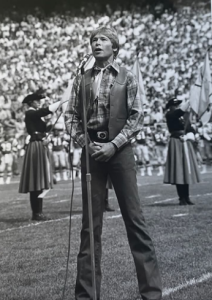
Life, unfortunately, isn’t always as simple as a song.
Despite the hope captured in “Annie’s Song,” John and Annie’s marriage eventually ended in divorce in 1982 after years of new pressures and personal struggles.
That ending has led some people to hear the song differently today.
But Annie herself never dismissed what it meant.
She continued describing it as a genuine expression of what John felt during that moment in Aspen.
The song wasn’t a promise that everything would always be perfect.
It was a snapshot of a moment when love felt completely real.
And perhaps that’s why it has lasted.
Half a century has passed since John Denver stepped onto that ski lift.
The mountains are still there.
The chairlift still climbs Aspen Mountain.
And “Annie’s Song” continues finding new listeners.
The Library of Congress has recognized Denver’s work as an important part of American musical history, while “Annie’s Song” remains one of the recordings most closely associated with his legacy.
The remarkable thing is that nothing about the song feels rushed.
You’d never guess it was written in ten minutes.
It sounds timeless.
Warm.
Gentle.
Almost effortless.
And maybe that’s because the hardest part had already happened.
The conversations.
The doubts.
The fear of losing someone.
By the time John Denver reached the top of that mountain, he wasn’t searching for words anymore.
He already knew exactly who filled up his senses.
The mountain simply helped him hear them.