Old School Music
The Song Elvis Turned Into One of His Biggest Hits
In the summer of 1960, Elvis Presley released a song that sounded completely different from the wild rock ’n’ roll that had made him famous.
It had a dramatic melody.
A romantic lyric.
And a vocal performance that demanded something Elvis had rarely shown quite like this before.
What most listeners didn’t know was that the song wasn’t originally written for Elvis at all.
Its melody came from a famous Italian song called “’O Sole Mio,” written decades earlier.
And the story of how Elvis transformed it into one of the biggest singles of his career is almost as fascinating as the recording itself.
While serving in the U.S. Army in Germany, Elvis became familiar with an English-language adaptation of “’O Sole Mio” called “There’s No Tomorrow,” recorded by Tony Martin in 1949.
The original melody had been written in Naples in the late 19th century and had become internationally famous.
Elvis was also a great admirer of the dramatic singing style of Mario Lanza, who had helped popularize the melody with American audiences.
The song stayed in Elvis’s mind.
He apparently recognized that the powerful melody could work beautifully with his own voice.
But there was one problem.
The original Italian lyrics weren’t going to work for the kind of pop record Elvis wanted to make.
So he needed something completely new.
Elvis’s music publisher, Freddy Bienstock of Hill & Range, brought the idea to songwriter Aaron Schroeder.
Wally Gold joined him.
Their job was to create a completely new English lyric that could fit the famous melody while giving Elvis a song that felt contemporary.
According to accounts of the recording’s history, the two songwriters worked incredibly quickly.
They finished the new lyrics in roughly 20 to 30 minutes.
The result was “It’s Now or Never.”
The title itself captured the entire idea.
Don’t wait.
Don’t hesitate.
If you love someone, tell them now.
Tomorrow might be too late.
The dramatic Italian melody suddenly had a completely new identity.
The song arrived at an important moment in Elvis’s career.
He had just returned from military service.
He wasn’t simply the young rockabilly rebel who had shocked audiences in the 1950s anymore.
He was entering a new stage of his career.
His voice had matured.
His audience had grown.
And he wanted to show that he could handle different kinds of material.
“It’s Now or Never” gave him the perfect opportunity.
The song demanded a powerful, almost operatic vocal performance.
And Elvis went after it.
Elvis recorded the song at RCA’s Studio B in Nashville on April 3, 1960.
The musicians included guitarist Scotty Moore, guitarist Hank Garland, bassist Bob Moore, drummer D.J. Fontana, pianist Floyd Cramer and saxophonist Boots Randolph, with the Jordanaires providing vocals.
But the biggest challenge was Elvis himself.
The song’s ending required him to deliver an enormous, full-throated vocal.
At one point, there was even discussion of using a splice to complete the ending if necessary.
Elvis refused.
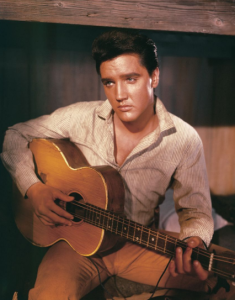
According to the official Elvis Presley site, his position was essentially that he wanted to sing the entire song himself rather than rely on an edited ending.
That decision mattered.
Because when you hear the finished recording, the final vocal doesn’t sound cautious.
It sounds like Elvis is throwing everything he has into it.
RCA released “It’s Now or Never” on July 5, 1960, backed with “A Mess of Blues.”
The response was enormous.
In the United States, the song reached No. 1 on the Billboard Hot 100 and stayed there for five weeks. It also became a No. 1 hit in the United Kingdom. Official Charts records eight weeks at No. 1 in Britain.
The song sold more than a million copies in the United States and became an enormous international success.
The official Elvis Presley site describes it as his most successful international hit to that point, with millions of copies sold across different territories.
And suddenly, the young rock ’n’ roll star who had once been considered dangerous was delivering a song with the grandeur of an Italian operatic classic.
That’s what makes the story so interesting.
Elvis didn’t simply record “’O Sole Mio.”
He didn’t sing the original Italian lyrics.
He took the melody and helped transform it into something completely different.
Aaron Schroeder and Wally Gold created the English lyrics.
Elvis brought his voice.
RCA brought the musicians.
And together, they created a recording that sounded like something completely new to millions of American listeners.
The melody had traveled from Naples to Europe, then into American popular music, and finally into the hands of Elvis Presley.
And when Elvis sang it, it became his.
For older fans who remember Elvis primarily as the young man shaking up television audiences in the 1950s, “It’s Now or Never” represented something important.
He could still sing rock ’n’ roll.
But he could also sing a romantic ballad with enormous vocal demands.
He could move from a whisper to a powerful high note.
He could take a melody associated with Italian popular music and make it sound completely natural coming from an American rock star.
It showed just how broad his voice had become.
And it helped establish the more mature pop sound that would become an important part of his career in the 1960s.
More Than 60 Years Later
The strangest part of the story may be how far the melody traveled.
It began with an Italian song.
It was adapted into an English recording in the 1940s.
Elvis heard that version while serving overseas.
Songwriters then created new lyrics specifically for him.
And in 1960, Elvis recorded his own version in Nashville.
A few months later, it was sitting at No. 1.
What began as an old European melody had become one of Elvis Presley’s signature songs.
And the lyrics gave it a message that still feels timeless:
Sometimes you don’t get another chance.
That’s why the song still works.
The melody is dramatic.
Elvis’s voice is unforgettable.
But underneath all of it is an idea everyone understands.
If you love someone, don’t wait forever to tell them.
Because sometimes…
it’s now or never.