
Old School Music
The Love Song That Wasn’t Written About a Woman
He was thinking about another man’s wife when he wrote this song—and somehow turned that moment into one of the most famous love songs of the 1960s.
But there was a twist.
The song wasn’t actually written about a specific woman.
The real inspiration was the man who would eventually sing it.
It Started With David Ruffin
Smokey Robinson was already an established songwriter and producer at Motown when he began working on a song for the Temptations.
At the time, David Ruffin was the group’s newest member.
Robinson believed Ruffin had something special.
He had a distinctive, rough-edged voice, and Robinson wanted to give him a song that would allow that voice to shine. The Library of Congress records Robinson’s explanation that he didn’t write the song about a particular girl. He wrote it specifically with Ruffin in mind.
That decision would change the Temptations’ career.
But there was still one important ingredient.
Where did the idea for the famous lyrics come from?
The Woman Who Inspired the Idea
Robinson was married to Claudette Rogers, a member of his own group, the Miracles.
According to Robinson, the song’s sunny imagery was inspired in part by Claudette.
She had been his wife for several years, and Robinson often drew from his personal life when writing.
But he wasn’t sitting down to write a song specifically about her.
Instead, he took feelings and images from his relationship and built them into something that could belong to anyone.
That’s part of what makes the song so interesting.
The lyrics sound incredibly personal.
But the songwriter wasn’t trying to tell one specific woman’s story.
He was creating a feeling.
And he had the perfect singer in mind.
He Wanted David Ruffin to Have His Moment
Robinson and fellow Miracles member Ronald White wrote the song together.
They also produced the recording.
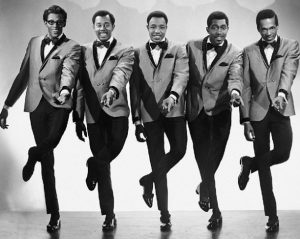
The Temptations were immediately interested.
The group began rehearsing the song while they were on the road, working out the arrangement and figuring out how the different voices would fit together.
But the biggest decision had already been made.
David Ruffin would sing lead.
That was important.
The Temptations were famous for their harmonies, but Robinson wanted the new song to showcase one particular voice.
Ruffin’s voice had a husky quality that could sound powerful without needing to shout.
And on this song, that contrast worked perfectly.
Then Came Those Three Notes
The recording took place at Motown’s Hitsville U.S.A. studio in Detroit.
The Funk Brothers provided the instrumental backing.
And right at the beginning, bassist James Jamerson played a tiny bass figure.
Just three notes.
Those three notes became one of the most recognizable openings in popular music.
The Library of Congress specifically highlights Jamerson’s understated opening bassline as one of the defining features of the recording.
Then guitarist Robert White enters with an ascending guitar figure.
Finger snaps follow.
The drums come in.
Ruffin begins singing.
The other Temptations add their harmonies.
And eventually, strings enter the arrangement.
The recording builds piece by piece.
It sounds effortless.
But there was a lot happening underneath it.
The Song Almost Had Doubters
When Robinson brought the completed recording to Motown’s weekly quality-control meeting, not everyone was immediately convinced.
Some people at the company weren’t sure the song was strong enough.
But Barney Ales, who was responsible for getting Motown records onto radio, believed in it.
Berry Gordy ultimately approved the release.
The record was sent to radio in December 1964.
And listeners quickly made their decision.
They loved it.
Then David Ruffin Became the Voice Everyone Knew
The song climbed the charts.
In March 1965, it reached No. 1 on the Billboard Hot 100, giving the Temptations their first No. 1 pop hit.
For Ruffin, it was a breakthrough.
The man Robinson had specifically wanted to showcase had suddenly become the voice at the center of one of Motown’s biggest songs.
Robinson later recalled Berry Gordy telling him that Ruffin was going to be a star and that the song would become a legend.
He wasn’t wrong.
A Song That Became Bigger Than Its Story
What’s fascinating about the record is that most listeners probably never thought about who the song was actually written for.
They simply heard a man singing about how wonderful his life felt because of the woman he loved.
That’s why the song became so universal.
You could hear it and immediately think about someone in your own life.
Your wife.
Your girlfriend.
Someone you had loved years earlier.
Or simply someone who made your life feel a little brighter.
The song didn’t require you to know anything about Smokey Robinson, David Ruffin, or the Temptations.
It just made you feel something.
And that’s exactly what Robinson wanted.
The Song Never Really Went Away
More than six decades later, the recording remains one of Motown’s defining songs.
The Library of Congress selected it for the National Recording Registry in 2017, recognizing its cultural and historical importance.
The song has also been recorded by countless other artists, including Otis Redding, the Rolling Stones, and the Mamas & the Papas.
Its use in the 1991 movie My Girl even helped send the original recording back up the charts in the United Kingdom decades after its first release.
But nothing quite replaced the original.
Those three opening bass notes.
That guitar line.
Those finger snaps.
And then David Ruffin’s voice.
You know the song almost before he finishes the first phrase.
The Real Story Behind the “Girl”
That’s what makes the story so interesting.
The song sounds like it was written for one particular woman.
But Smokey Robinson said it wasn’t.
He wrote it for a particular man.
David Ruffin was the person he wanted to showcase.
And the feelings behind the lyrics came partly from Robinson’s own relationship with his wife, Claudette.
So the song wasn’t really about one woman at all.
It was about taking something personal and turning it into something everyone could understand.
That’s why, more than 60 years later, people still hear it and immediately think of someone they love.
A songwriter had a singer in mind.
A husband had his own relationship in mind.
A group had a chance to make something special.
And the result became one of the most recognizable love songs ever recorded.
Sometimes the most universal songs don’t come from one person’s story.
They come from a feeling that millions of people recognize as their own.