
Old School Music
The Love Song That Made Millions Believe in Staying Together
SCROLL DOWN FOR THE FULL SONG
Some love songs are about falling in love. Others are about heartbreak, regret, or the pain of losing someone.
But in 1971, one unforgettable recording offered something different. It wasn’t about chasing someone who had left. It wasn’t about begging for another chance.
It was about making a promise before life tested the relationship.
A promise to stay when things were good. To stay when things were difficult. To choose the same person through the happy days and the sad ones.
The voice was smooth, warm, and almost impossibly intimate. The melody felt effortless, and every note seemed to carry a little more feeling than the last.
The song was “Let’s Stay Together,” performed by Al Green.
More than half a century later, it remains one of the great love songs of American music. But its story is about more than a beautiful voice and a memorable melody. It is also the story of a singer, a gifted production team, and a recording that helped define the sound of soul music in the early 1970s.
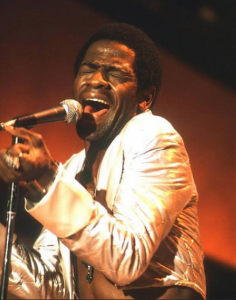
A Voice Unlike Any Other
Al Green was born Albert Leornes Greene on April 13, 1946, in Forrest City, Arkansas. He grew up surrounded by gospel music, singing with his family and developing a musical foundation that would stay with him throughout his career.
Gospel gave him more than a place to begin. It helped shape the way he used his voice.
Green could sing softly without losing intensity. He could move into a delicate falsetto that sounded almost like a whisper, then fill a room with emotion without appearing to force a single note.
By the late 1960s, he was working to establish himself as a recording artist. His early career included performances with the group known as Al Greene and the Soul Mates, but his greatest success would come after he began working with producer Willie Mitchell in Memphis, Tennessee.
Mitchell recognized that Green did not need to imitate anyone else.
He needed a sound that belonged entirely to him.
Together, they developed a style that blended the warmth of soul, the influence of gospel, elegant arrangements, and rhythms that made people want to move.
The result was intimate music that could feel both romantic and deeply emotional.
And then came the song that brought all those qualities together.
The Men Behind the Music
“Let’s Stay Together” was written by Al Green, Willie Mitchell, and drummer Al Jackson Jr.
Each brought something different to the collaboration.
Jackson, known for his work with Booker T. & the M.G.’s, helped establish the song’s distinctive rhythm. Mitchell shaped the musical arrangement and production. Green supplied the words and the vocal performance that would make the recording unforgettable.
The collaboration was a perfect example of how great records can emerge when musicians understand one another.
The song came together from a musical idea developed by Mitchell and Jackson. When Green returned to the studio and worked on the vocal and lyrics, the pieces fell into place remarkably quickly.
According to accounts of the recording’s creation, Green completed his part of the writing in a short period of time.
Sometimes a song takes years to find its final shape. Other times, the right people come together, hear something special in a simple idea, and recognize what it could become.
That was the magic of this recording.
Its central message was straightforward. It did not need complicated poetry or elaborate storytelling. It needed words that sounded sincere when sung by someone who could make a simple promise feel enormous.
Green delivered exactly that.
The Sound of Memphis Soul
The recording was made at Royal Recording Studio in Memphis, a place that became closely associated with the distinctive sound developed by Mitchell and the musicians around him.
The studio had its own character, and the musicians knew how to use space, rhythm, and restraint to make a recording feel alive.
“Let’s Stay Together” opens with a gentle, rolling groove. The instruments don’t compete for attention. Instead, they create a relaxed foundation for Green’s voice.
The rhythm has a natural movement that makes the song feel effortless. The arrangement gradually opens up, giving the performance room to breathe.
And then there is Green himself.
He doesn’t sing as though he is delivering a grand declaration to an audience. He sounds as though he is making a personal promise to one person standing directly in front of him.
That intimacy is central to the song’s appeal.
The performance feels romantic without becoming overly dramatic. It is confident without being arrogant. It is tender without losing its rhythm.
Mitchell understood the value of that balance. Rather than crowding the recording with unnecessary sounds, he allowed the singer’s voice to remain at the center.
The result was a record that sounded polished but never cold.
It was music that could fill a dance floor while still feeling private.
A Promise Bigger Than Romance
What makes “Let’s Stay Together” different from many love songs is the kind of commitment it describes.
A lot of romantic music focuses on the excitement of beginning a relationship. There are songs about first kisses, unexpected attraction, and the feeling that someone has completely changed your world.
This song looks beyond that first moment.
It asks a more lasting question: what happens after the excitement settles down?
What happens when life becomes complicated? When money is tight, when disagreements arise, when responsibilities grow, and when the two people involved discover that love alone does not make every day easy?
The song’s answer is simple.
Stay together.
Not because every day will be perfect. Not because two people will always agree. But because a relationship can mean more than the circumstances surrounding it.
That message has helped the song remain relevant across generations.
For someone who fell in love in the early 1970s, it may bring back memories of a first serious relationship, a wedding, or a long drive with someone special.
For someone younger, it might sound like the kind of promise they hope to make one day.
And for people who have spent decades together, the song can carry a different meaning altogether.
They know that staying together is not just a romantic idea. It is something demonstrated through thousands of ordinary decisions.
It is showing up. Listening. Forgiving. Trying again.
The song captures that commitment in a way that feels natural rather than preachy.
From a Memphis Studio to the Top of the Charts
Released as a single in late 1971, “Let’s Stay Together” quickly became one of Al Green’s defining recordings.
It reached No. 1 on the Billboard Hot 100 in February 1972 and also topped the American R&B chart.
For Green, it marked a major breakthrough. He was no longer simply a promising soul singer with a growing audience. He had a record that reached across musical boundaries and became part of American popular culture.
The song’s success also helped establish the album of the same name, released in 1972, as an important part of his growing body of work.
The early 1970s were full of musical change. Rock, soul, funk, country, and singer-songwriter music were all finding new audiences. Yet this recording did not need a complicated concept to stand out.
It offered a memorable melody, an unmistakable voice, and a message almost everyone could understand.
That combination proved powerful.
Listeners did not need to know anything about the recording studio in Memphis or the musicians behind the arrangement. They only needed to hear the first few notes.
And once Green began to sing, the song did the rest.

When the Song Found Tina Turner
One of the most interesting parts of the song’s later history came in 1983, when Tina Turner recorded her own version.
By then, Turner was rebuilding her career as a solo artist. Her interpretation of “Let’s Stay Together” gave the song a different energy, with her distinctive voice bringing a new intensity to the familiar material.
Released in 1983, her version became a hit in the United States and helped introduce the song to another generation.
The two recordings demonstrate something important about great songwriting.
A song can survive a change in voice, arrangement, and musical era when its central idea remains strong.
Green’s version is smooth and intimate. Turner’s is more forceful and charged with her own personality.
Neither needs to replace the other.
They show how one song can mean different things to different performers while retaining the message that made it special in the first place.
For listeners who grew up with Green’s original, Turner’s version may have offered a fresh way to hear a familiar favorite. For others, it may have been their first introduction to the song.
Either way, its life continued.
Why It Still Belongs on the Radio
There is something remarkable about a song that can be released in one decade and still feel relevant many decades later.
Music changes. Recording technology changes. The way people discover songs changes. A record that once played on a family radio can eventually be heard through headphones, in a film, or during a celebration thousands of miles from where it was made.
But the feeling behind “Let’s Stay Together” has not become outdated.
People still want to feel chosen. They still want to know that love will not disappear the first time life becomes difficult.
And they still understand the difference between someone who enjoys the easy days and someone willing to remain present when things are hard.
The song does not promise a life without problems. It offers something more realistic: the hope that two people can face those problems together.
That is why it works so well at weddings and anniversaries. It is not merely a song about attraction. It is about a decision.
The melody may be smooth, but the commitment at its center is serious.
Perhaps that is also why the song can bring back such powerful memories. It gives listeners a way to remember not just how love began, but how it continued.
The Legacy of Al Green
Al Green went on to become one of the most respected voices in soul music. His recordings helped define the Memphis sound of the 1970s, and his influence can be heard in generations of singers who followed.
He was inducted into the Rock & Roll Hall of Fame in 1995, recognition of his lasting impact on popular music.
His career also took a spiritual direction. Green became an ordained pastor and devoted much of his life to gospel music and ministry, while his earlier recordings continued to reach new audiences.
That journey reflects the range of a performer whose music could express desire, vulnerability, joy, and spiritual longing.
Yet “Let’s Stay Together” remains one of the clearest examples of his gift.
It does not rely on a dramatic story or a complicated message. Its power comes from the feeling that a promise is being made and meant.
The instruments settle into their groove. Green’s voice rises and falls with effortless control. And the song returns to its central idea: whatever life brings, let us face it together.
A Song for the People Who Stayed
Think about the people who have been part of your life for years.
Perhaps there is someone you met when you were young. Someone who stood beside you through difficult times, celebrated your successes, and helped you become the person you are today.
Maybe you have shared a marriage, raised a family, or built a life together through circumstances neither of you could have predicted.
Or perhaps the person you remember is someone who is no longer here, but whose presence still feels close whenever a certain song plays.
Music has a way of bringing those memories back without asking permission.
One melody can return you to a kitchen, a living room, a dance floor, or a quiet evening when the future seemed full of possibilities.
“Let’s Stay Together” has carried those memories for generations.
And perhaps its greatest achievement is that it makes a lasting promise sound simple enough to say, but meaningful enough to spend a lifetime trying to keep.
When Al Green recorded this song in 1971, he could not have known how many weddings, anniversaries, reunions, and quiet moments it would accompany.
He could not have known how many people would hear it decades later and think of the person they loved.
But the recording gave those people something enduring.
A melody. A memory. A reminder that love is not only about how two people find each other.
It is also about how they choose to remain together.
And that is why, after all these years, this beautiful soul classic still deserves a place on the radio.
Some songs remind us of the past. This one reminds us who we want beside us in the future.