
Old School Music
The Hit They Wrote in Half an Hour
Sometimes a band spends months trying to write a hit.
The Spencer Davis Group had half an hour.
In 1966, the Birmingham group was under pressure to come up with another strong song. Their manager and label boss Chris Blackwell wanted a follow-up to the band’s earlier successes, and the clock was ticking.
So the musicians went into a rehearsal room at London’s Marquee Club and started messing around with riffs.
Less than an hour later, they had a song.
It would become “Gimme Some Lovin’.”
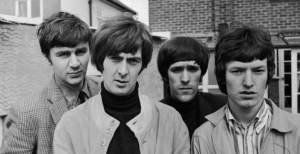
The Spencer Davis Group had already established themselves in Britain.
Their previous singles, including “Keep On Running” and “Somebody Help Me,” had reached No. 1 in the UK. But their next single, “When I Come Home,” hadn’t performed nearly as well.
The band needed another record.
And they needed it quickly.
Chris Blackwell, the founder of Island Records and the group’s manager and producer, brought the musicians together in London and pushed them to come up with something new.
The musicians were Spencer Davis on guitar, Muff Winwood on bass, Steve Winwood on organ and vocals, and Pete York on drums.
And there was one member who was about to become especially important.
Steve Winwood was only 18 years old.
Yet his voice already sounded far older than his age.
Muff Winwood later recalled that the band started experimenting with different riffs around 11 in the morning.
Nobody had a finished song.
There wasn’t some carefully prepared composition waiting to be recorded.
They were simply trying ideas.
Muff came up with a bass figure.
Spencer Davis added chords.
Steve Winwood suggested changing the chords from minor to major.
And suddenly, something clicked.
The band had the foundation of the song.
Then came the words.
Steve was reportedly shouting out phrases while they worked through the music, including “gimme some lovin’.”
It wasn’t necessarily intended to be the final title.
It was simply something that fit.
But the phrase stuck.
By around noon, according to Muff Winwood’s recollection, the basic song was together.
They had been working for roughly half an hour.
The song’s creation wasn’t the end of the story.
Producer Jimmy Miller had recently become involved with the group, with Blackwell wanting to push them toward a sound that could connect more strongly with American audiences. Miller would later become famous for his work with the Rolling Stones.
When “Gimme Some Lovin’” was recorded, Miller helped give the track its huge, energetic sound.
The recording was made at Philips Studios in London during June and September 1966.
And Miller wasn’t afraid to experiment.
Drummer Pete York later recalled that Miller brought an enormous African drum into the studio and played it himself.
The goal was simple:
Make the record sound bigger.
That extra percussion became part of the track’s powerful rhythmic character.
But the thing that immediately grabs you is Steve Winwood.
He was only 18.
Yet the voice coming through the speakers sounded gritty, soulful and completely confident.
It didn’t sound like a teenager trying to imitate an American soul singer.
It sounded like somebody who had been doing this for decades.
The combination was unusual:
Muff Winwood’s bass.
Pete York’s drums.
Steve’s Hammond organ.
Spencer Davis’s guitar.
And that enormous vocal.
The result was a song that sat somewhere between British rock, American soul and rhythm and blues.
And it was fast.
Short.
Explosive.
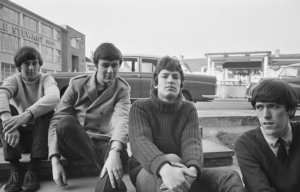
There was almost no wasted space.
There’s also a fascinating—and somewhat disputed—part of the song’s history.
The official songwriting credits are shared by Steve Winwood, Muff Winwood and Spencer Davis. Music databases and historical records reflect those three writers.
But Spencer Davis later disputed parts of the commonly told story.
He said that a man named Paul Metcalfe contributed substantially to the lyrics, and he also raised questions about similarities between the song’s musical ideas and Homer Banks’ “(Ain’t That) A Lot of Love.”
Those claims have become part of the song’s complicated history.
So while the official credits remain Davis and the Winwood brothers, the origins of the song have been debated by people involved with it.
That makes the story considerably more interesting than the simple “they wrote it in half an hour” version.
“Gimme Some Lovin’” was released in October 1966.
In Britain, it climbed to No. 2.
Then it crossed the Atlantic.
In the United States, it reached No. 7 on the Billboard Hot 100, giving the Spencer Davis Group their first major American Top 10 hit.
The song also became one of the group’s biggest-selling records, with the band’s hits “Gimme Some Lovin’” and “I’m a Man” eventually selling more than a million copies each.
Suddenly, the song that had been created because the band needed another record was being heard everywhere.
There’s an ironic part of the story.
Even as “Gimme Some Lovin’” was becoming a huge success, the Spencer Davis Group’s original lineup was approaching its end.
Steve Winwood was growing increasingly interested in exploring different musical directions.
In 1967, he left the group and formed Traffic with Dave Mason, Chris Wood and Jim Capaldi.
Muff Winwood also departed around the same period.
So one of the band’s biggest songs arrived just as the lineup that created it was beginning to disappear.
That didn’t stop “Gimme Some Lovin’.”
Over the years, countless artists recorded it.
The song became particularly famous through performances and recordings by artists including The Blues Brothers, while Steve Winwood himself continued performing it in later years.
It also found a second life in movies, television and commercials.
Spencer Davis’s official website notes that the song has accumulated more than three million broadcast performances according to BMI and has appeared in films including Top Gun, The Big Chill, The Blues Brothers and Notting Hill.
That’s remarkable for a song that began with four musicians simply trying to come up with something before lunchtime.
There’s something almost perfect about the story.
They weren’t sitting in a quiet studio waiting for inspiration.
They were under pressure.
They needed another song.
They started playing.
One riff led to another.
A bass line found its place.
An organ came in.
Steve Winwood started shouting words.
And suddenly, the song was there.
About half an hour.
That’s all it took to create the foundation of one of the most recognizable British soul-rock songs of the 1960s.
The musicians couldn’t have known where it would go.
They couldn’t have known that people would still be hearing it decades later.
They couldn’t have known that other generations would discover it through movies and covers.
They just knew they had something that sounded good.
And sometimes, that’s enough.
A little pressure.
A room full of musicians.
One great riff.
And half an hour later…
“Gimme Some Lovin’” was born.