Old School Music
The first time people heard this in 1966, they knew music would never sound the same again.
Some songs arrive quietly, while others seem to announce that the future has already begun the moment the first note fills the room.
When The Yardbirds released “Shapes of Things” in 1966, rock music suddenly sounded older, wiser, and strangely more adventurous than it had only months before.
It was not simply another hit single but the sound of a band discovering that popular music could challenge the imagination as much as entertain it.
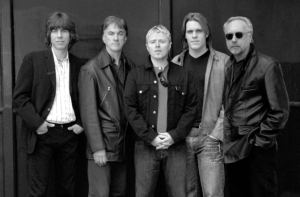
Long before psychedelic rock became a movement, this remarkable recording hinted that a musical revolution was already waiting around the corner.
The Yardbirds had built their reputation on electrifying blues, yet they refused to remain trapped by expectations.
Instead of repeating familiar formulas, they searched for sounds that had never been heard on mainstream radio before.
That fearless curiosity became one of the defining qualities that separated them from so many talented bands of their era.
At the center of the recording stood Jeff Beck, whose guitar seemed less interested in following rules than creating entirely new possibilities.
His playing did not simply accompany the song because it became another voice telling its own emotional story.
Every bend, every burst of feedback, and every unexpected phrase carried an excitement that still feels surprisingly modern today.
Listeners in 1966 were hearing something they could hardly describe because rock guitar itself was being reinvented before their ears.
The opening immediately creates an atmosphere filled with mystery instead of predictable confidence.
Rather than rushing toward a familiar chorus, the song slowly invites listeners into a world where questions matter more than easy answers.
Its lyrics ask people to look beyond appearances and think about the consequences of human actions.
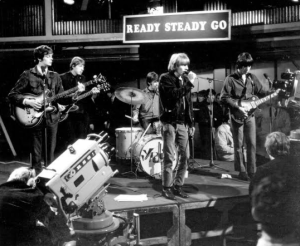
For a generation growing up during enormous social and political change, those questions felt impossible to ignore.
Unlike many hit records of its time, “Shapes of Things” dared to explore ideas that reached beyond romance.
It reflected growing concerns about war, humanity, and the future without ever sounding like a lecture.
That thoughtful balance gave the song a depth that listeners continue discovering decades later.
Keith Relf delivered every line with conviction, allowing emotion to guide the performance instead of unnecessary dramatics.
Behind him, the band created a musical landscape that felt both disciplined and unpredictable.
The rhythm section remained steady while the guitars wandered into exciting new territory.
That contrast gave the recording an energy that continues surprising first-time listeners even now.
Perhaps the most unforgettable moment arrives during Jeff Beck’s groundbreaking guitar solo.
Instead of chasing technical perfection, he embraced raw emotion, distortion, and expressive experimentation.
Those bold choices inspired countless guitarists who later helped define classic rock, hard rock, and even heavy metal.
Many legendary musicians have acknowledged how deeply The Yardbirds influenced their own creative journeys.
Listening today, it becomes easy to understand why this recording still commands so much respect.
Its innovations never feel outdated because they were driven by imagination rather than temporary musical trends.
The song captured a moment when artists realized that rock music could become a serious form of artistic expression.
That realization changed not only The Yardbirds but the entire direction of popular music.
As the 1960s unfolded, countless bands followed pathways first illuminated by recordings like this one.
Without demanding attention through sheer volume, “Shapes of Things” quietly expanded the boundaries of what audiences expected from a rock single.
Its influence can still be heard whenever musicians choose creativity over convention.
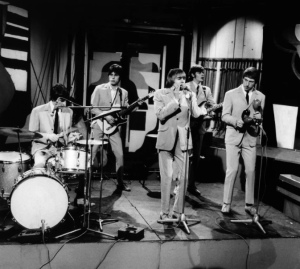
Generations may discover the song through different speakers, streaming services, or vinyl records, but its spirit remains remarkably unchanged.
Every new listener experiences the same sense of curiosity that audiences felt nearly sixty years ago.
That lasting freshness is one of the greatest compliments any piece of music can receive.
Some recordings preserve the sound of an era, while others somehow predict the future before anyone else can see it.
“Shapes of Things” belongs proudly among those rare visionary works.