
Old School Music
He Was Struggling to Make It as a Songwriter—Then a Country Superstar Recorded His Song
SCROLL DOWN FOR THE FULL SONG
He was still struggling to make a living as a songwriter when he came up with this song. He had no idea that another singer would turn his words into one of the most beloved heartbreak classics of all time—a song generations of listeners would never forget.
In the early 1960s, Willie Nelson was trying to find his place in the music business.
He had moved to Nashville, Tennessee, hoping to make it as a songwriter. He wasn’t yet the country music legend the world would eventually know. He was a working musician trying to sell his songs, earn enough money to survive, and convince people that his writing was worth listening to.
He had talent. He had ideas. And he had a way of putting complicated feelings into simple words.
But becoming a successful songwriter was one thing.
Getting the right person to sing those words was another.
Then came a song about loving someone who didn’t love you back.
A Song About Being Unable to Let Go
The idea behind the song was painfully simple.
Sometimes, you know a relationship is hurting you.
Sometimes, you know the other person doesn’t feel the same way.
And sometimes, even knowing all of that, you still cannot stop loving them.
That was the feeling Willie Nelson captured.
The narrator isn’t angry. He isn’t trying to win an argument. He is simply admitting that he cannot escape his own feelings.
It’s a confession that almost everyone can understand.
You can tell yourself to move on. You can recognize that a relationship is over. You can even understand that the other person may never return your love.
But the heart doesn’t always listen to reason.
Nelson had a gift for writing about those contradictions. He could make a few ordinary words feel like an entire lifetime of regret.
And this song would prove just how powerful that gift could be.
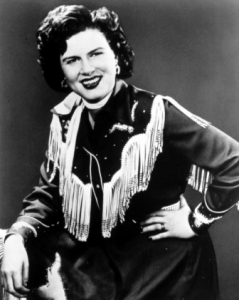
Then Patsy Cline Entered the Story
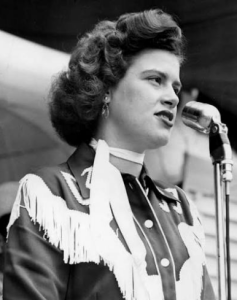
By the time the song reached Patsy Cline, she was already one of country music’s most distinctive voices.
She had a remarkable ability to take a lyric and make it feel personal. She didn’t need to shout or overdo the emotion. She could let a single note carry the sadness.
But the song Nelson had written presented an opportunity to do something special.
In Cline’s hands, the words became more than a songwriter’s confession.
They became a performance about the terrible feeling of knowing you should walk away from someone, yet being unable to stop loving them.
Her voice had warmth, power, and vulnerability. She could sound strong one moment and heartbroken the next.
It was exactly the kind of performance the song needed.
The Recording That Changed Everything
In 1961, Patsy Cline recorded the song.
The arrangement gave her voice room to breathe. The production blended country music with a fuller, more polished sound, helping the recording reach listeners well beyond traditional country audiences.
And then came the performance itself.
Cline didn’t sing the song as if she were simply reading words from a page.
She made it sound as though she were admitting something she had tried to hide.
Every phrase carried the same painful message: she knew better, but she couldn’t help herself.
The recording was released in 1961, and listeners responded.
The song climbed the country charts and crossed over to the pop charts, becoming one of the defining recordings of Cline’s career.
For Willie Nelson, it was an extraordinary moment.
A song he had written was now reaching millions of people through one of the most recognizable voices in American music.
The Song Became Bigger Than Its Writer
Here’s what makes the story so remarkable.
Nelson would eventually become a superstar in his own right, known for his unmistakable voice, his unconventional style, and a career that stretched across generations.
But when he wrote this song, he was still working to establish himself.
Patsy Cline helped bring his writing to a much wider audience.
Her recording demonstrated that a great song could travel far beyond the person who first created it. The right voice could unlock something hidden inside the lyrics and allow listeners to connect with them in a completely different way.
And that’s exactly what happened here.
The song became a standard—one of those rare recordings that other singers could revisit without ever quite replacing the original in people’s memories.
The Tragedy That Made the Song Even More Powerful
In March 1963, less than two years after recording the song, Patsy Cline died in a plane crash at just 30 years old.
Her death shocked the music world.
She had been at the height of her career, with so much more music still ahead of her.
Suddenly, her recordings carried a different kind of weight.
Listeners could hear the voice of a singer whose life had ended far too soon, preserved forever in the songs she had left behind.
Her version of this heartbreak classic became part of that lasting legacy.
It was no longer simply a hit from the early 1960s. It was a reminder of a remarkable voice that the world had lost.
Willie Nelson Never Forgot What a Song Could Do
Willie Nelson went on to build an extraordinary career of his own.
He became one of the most influential figures in country music, recording countless songs and developing a style that was unmistakably his.
And he continued performing the song he had written years earlier.
When Nelson sang it himself, audiences could hear the story from another perspective. The songwriter who had created the words could now deliver them in his own distinctive voice.
It was a reminder that a great song doesn’t belong to only one moment or one performer.
It can take on a new life each time someone sings it.
Why We Still Remember It
More than six decades later, the song remains one of the great recordings of its era.
Its appeal isn’t complicated.
It speaks to something deeply human: the gap between what we know and what we feel.
We know when something is hurting us.
We know when we should let go.
But knowing those things doesn’t always make them easy to do.
That’s why the song still resonates with people who weren’t even born when Patsy Cline recorded it.
The clothes have changed. The world has changed. The way music is recorded and shared has changed completely.
But heartbreak hasn’t changed nearly as much.
And neither has the feeling of hearing someone sing the words you’ve never quite managed to say yourself.
Willie Nelson wrote the song while trying to make his way in Nashville. Patsy Cline gave it a voice that would make history.
Together, they helped create a classic that outlived its era and continues to find new listeners.
Sometimes, a songwriter writes down a feeling that seems too personal to share.
Then a great singer comes along, gives that feeling a voice, and millions of people discover that it was their story all along.