
Old School Music
He Told Her He Loved Her. But There Was One Thing He Could Never Promise—and It Became a Classic.
SCROLL DOWN FOR THE FULL SONG
Sometimes, the most painful words in a relationship are not the ones spoken in anger.
They are the honest words that come when two people want different things.
One person wants forever. The other wants to be honest about what they can offer.
There may be affection. There may be passion. There may even be a genuine desire to make things work.
But when one person is asking for a promise the other cannot make, love becomes complicated.
In 1977, a powerful rock singer delivered a song built around that uncomfortable truth.
It was not the usual love story. There was no promise that everything would work out, no guarantee that the couple would grow old together, and no easy ending that made the pain disappear.
Instead, the song told the story of a man who could offer two important things—but could not give the woman he loved the third.
It became one of the most recognizable songs from one of the most theatrical rock albums of the decade.
The singer was Meat Loaf.
And the song was “Two Out of Three Ain’t Bad.”

The Voice Behind the Heartbreak
By the late 1970s, rock music was filled with larger-than-life performers.
Concerts were becoming spectacles. Albums told elaborate stories. Singers built entire musical identities around dramatic voices and unforgettable characters.
Meat Loaf fit that world perfectly.
Born Marvin Lee Aday, he possessed a powerful voice capable of moving from quiet vulnerability to explosive intensity.
He had a background in musical theatre, and that experience shaped the way he performed. He did not simply sing a song. He inhabited the emotions of the person telling the story.
When he sang about heartbreak, the performance could feel like a confession delivered at the end of a long, difficult night.
When he sang about love, it rarely sounded casual.
Everything felt important.
That was one of the reasons his partnership with songwriter Jim Steinman became so successful. Steinman wrote dramatic, story-driven songs filled with emotional extremes, and Meat Loaf had the voice to bring them to life.
Together, they created music that sounded less like ordinary radio pop and more like a dramatic scene unfolding in front of an audience.
“Two Out of Three Ain’t Bad” became one of the clearest examples of that approach.
A Different Kind of Love Song
Most traditional love songs promise something beautiful.
They tell us that love can overcome any obstacle, that two people are meant to be together, or that devotion will eventually lead to happiness.
This song takes a different direction.
Its central character is speaking to someone who wants more from him than he believes he can give.
He is not claiming that his feelings are meaningless. He is not pretending that the relationship never mattered.
Instead, he admits that there is a limit to what he can promise.
That is what makes the story so uncomfortable.
If he did not care about her at all, the situation might be easier to understand. She could walk away knowing that the relationship had never been what she hoped it would be.
But the song presents something more complicated.
There is affection, desire, and emotional attachment. Yet one crucial part of the relationship remains unresolved.
And the woman is left facing a difficult question: should she accept what he can offer, or leave because it is not enough?
It is a situation that many people recognize.
Sometimes, two people care about each other but want different futures. Sometimes, one person is ready for commitment while the other remains uncertain.
And sometimes, the hardest thing to accept is that genuine feelings do not automatically make two people compatible.
The Mind Behind the Song
The song was written by Jim Steinman, the songwriter and composer whose dramatic style helped define Meat Loaf’s breakthrough album, Bat Out of Hell.
Released in October 1977, the album became one of the most successful rock records of all time.
Steinman approached songwriting like storytelling. His compositions often featured vivid characters, emotional confrontations, and relationships pushed to their limits.
He was interested in the moments when people reveal what they truly want—and what they are afraid to admit.
That made him particularly effective at writing songs about love.
Rather than presenting relationships as simple stories with obvious heroes and villains, he often explored desire, frustration, insecurity, and contradiction.
“Two Out of Three Ain’t Bad” reflects that approach.
Its central idea is memorable because it sounds almost reasonable at first. The man is trying to explain himself. He is acknowledging what he can give rather than making promises he cannot keep.
But the title also reveals the problem.
In a relationship, the thing that is missing can matter more than everything that is present.
A person might offer affection, companionship, and attraction. Yet if their partner needs commitment, honesty about the future, or a shared sense of direction, those other qualities may not be enough.
The song leaves listeners to decide whether its narrator is being admirably honest or asking someone else to accept less than they deserve.
That tension is part of what makes it memorable.
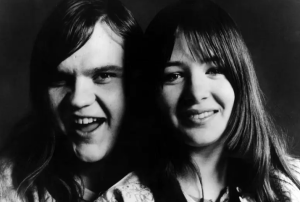
The Album That Changed Everything
When Bat Out of Hell arrived in 1977, it was unlike most records competing for attention.
The album combined rock music with theatrical storytelling, dramatic arrangements, and songs that often felt like miniature films.
Its title track was an epic, while “Paradise by the Dashboard Light” told a sprawling story about young romance, desire, and the consequences of decisions made in the heat of the moment.
Then there was “Two Out of Three Ain’t Bad.”
Compared with the album’s more explosive moments, the song was a slower, more reflective confession.
But it was no less dramatic.
The arrangement gave Meat Loaf room to build the emotion gradually. The piano-led opening created an intimate atmosphere, while the fuller production added weight as the story unfolded.
His voice carried the conflict at the center of the lyrics.
He sounded like someone who wanted to explain himself clearly, even though the truth would probably hurt the person listening.
That combination of vulnerability and theatrical intensity helped the song stand out.
It was released as a single in 1978 and became a major hit in the United States, reaching No. 11 on the Billboard Hot 100.
For many listeners, it became one of the defining songs from Bat Out of Hell.
Why the Song Still Divides People
Here is where the song becomes especially interesting.
Listen to it from the man’s perspective, and you might hear someone trying to be honest.
He is not promising a future he cannot guarantee. He is telling the woman what he can offer, rather than pretending to be a perfect partner.
From that perspective, honesty may be better than making a promise simply to keep someone from leaving.
But listen from the woman’s perspective, and the story changes.
She may have invested years in the relationship. She may want marriage, a family, or the reassurance that the person she loves is committed to building a future with her.
If those things matter deeply to her, accepting less could mean putting her own hopes aside.
That does not necessarily make either person a villain.
People can want different things without either of them being dishonest or cruel.
The problem begins when one person hopes the other will eventually change, while the other is already telling them what they can and cannot offer.
One person waits.
The other continues as before.
And the relationship becomes a struggle between accepting reality and hoping for something different.
The song never turns that conflict into an easy moral lesson.
Instead, it leaves us with a question that can be difficult to answer even in our own lives.
When someone tells you honestly that they cannot give you what you need, is staying an act of love—or an act of denying yourself?
When Love Isn’t Enough
There is a reason this song can feel more painful as people grow older.
When we are young, it is easy to believe that love can solve almost anything.
If two people care enough, we imagine, they will find a way to make everything work.
Sometimes they do.
But experience teaches us that relationships also depend on timing, shared values, trust, communication, and the willingness to build the same kind of future.
Two people can have powerful feelings for each other and still be moving in different directions.
One might want stability while the other wants freedom. One might be ready to settle down while the other is still trying to understand what they want from life.
Neither person necessarily has bad intentions.
But if their needs are fundamentally different, affection alone may not resolve the conflict.
That can be a difficult truth to accept.
It is especially painful when the relationship is good in many ways. You may share laughter, memories, attraction, and moments that make you believe everything could work out.
Walking away can feel almost impossible because you are not leaving a relationship in which everything was bad.
You are leaving something that had real value but could not give you everything you needed.
That is the emotional territory explored by “Two Out of Three Ain’t Bad.”
It asks whether a relationship can survive when something essential is missing.
And it reminds us that the answer may be different for every person.
The Power of Meat Loaf’s Performance
The song would not have had the same impact without Meat Loaf’s voice.
He had a remarkable ability to make emotional contradictions sound believable.
He could sound sincere without seeming completely certain. He could make a confession feel intimate while delivering it with the intensity of a stage performance.
That combination was central to his appeal.
He did not sing as though the character had already resolved every conflict. Instead, he allowed the uncertainty to remain.
The result was a performance that felt like an argument between what a person wants to believe and what they know to be true.
The music supports that feeling.
The slower passages give the lyrics room to breathe. As the arrangement grows, the emotional stakes become larger.
But the song’s central conflict never disappears.
The man still has something he cannot promise. The woman still has to decide whether that is enough.
The music can intensify the emotion, but it cannot solve the problem.
And perhaps that is exactly how it should be.
Some of the hardest decisions in life cannot be resolved by finding the perfect words or waiting for the right song to play.
They require us to be honest about what we need—and about what another person is genuinely able to give.
More Than Four Decades Later
Over the years, “Two Out of Three Ain’t Bad” has remained one of Meat Loaf’s most recognizable recordings.
Its appeal goes beyond the theatrical style of the 1970s because the conflict at its center has never disappeared.
People still fall in love with partners who want different things. They still hope that uncertainty will eventually become commitment. They still struggle to decide whether to stay with someone who offers a great deal but cannot offer the one thing they want most.
The details change.
The emotional dilemma remains.
The song also demonstrates why the partnership between Meat Loaf and Jim Steinman was so effective.
They understood that a memorable song does not always need a simple message. Sometimes, it needs a character whose words reveal a difficult truth without resolving it.
The listener becomes part of the story, weighing the arguments and deciding what they would do in the same situation.
And that is why people can hear the same song at different stages of life and come away with different interpretations.
At one age, the narrator might sound honest.
At another, he might sound selfish.
And later still, you might recognize parts of both perspectives.
So, Is Two Out of Three Ever Enough?
Perhaps the most uncomfortable thing about this song is that it does not offer a universal answer.
For some people, a relationship can survive without every dream being fulfilled. They may value companionship, affection, and the life they have built together more than a particular promise about the future.
For others, the missing piece may be essential.
They may know that staying means waiting for something that will never arrive.
Neither decision is automatically right for everyone.
What matters is whether both people understand the reality of the relationship and can choose it freely, without relying on promises that were never made.
Honesty can hurt.
But false hope can hurt even more.
And sometimes, the most loving thing two people can do is acknowledge that they want different futures before they spend years trying to force their lives into the same shape.
That is the difficult truth hidden inside this classic song.
Love can be genuine without being enough to sustain a relationship.
And accepting that reality can be one of the hardest decisions a person ever makes.
So here’s the question: Would you stay with someone who genuinely loved you but couldn’t promise you the future you wanted—or would you walk away?
There is no easy answer.
But sometimes, the most unforgettable songs are the ones that leave us arguing with ourselves long after the music stops.