
Old School Music
He Lost His Mother When He Was Just 14. Years Later, A Dream Inspired One of the Most Comforting Songs Ever Written
SCROLL DOWN FOR THE FULL SONG
Some songs are written to entertain us. Others seem to arrive at exactly the moment we need them most.
This song became a source of comfort for millions of people. It has been played at funerals, sung in churches, performed at memorials, and turned to during some of life’s hardest moments.
But its story begins with a son who had lost his mother far too young.
Years later, when he was an adult facing a difficult period in his life, he had a dream that stayed with him long after he woke up. In that dream, his mother appeared to him with a simple message of reassurance.
He could not have known that this experience would help inspire a song that generations of people would carry in their hearts.
His name was Paul McCartney.
And the song was “Let It Be.”
A Loss That Never Completely Leaves You
Paul McCartney was only 14 years old when his mother, Mary, died of breast cancer in 1956.
She had been a central figure in his young life. She worked as a nurse and midwife, helping support the family while raising Paul and his younger brother, Michael, alongside their father, Jim.
Her death was devastating.
At an age when most teenagers are beginning to discover who they are, Paul had to face a loss that would stay with him for the rest of his life.
He rarely spoke publicly about grief in those early years. Like many people, he continued living, growing older, and finding ways to move forward.
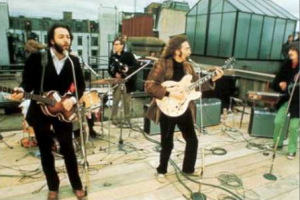
Music eventually became a major part of his life. Alongside John Lennon, George Harrison, and Ringo Starr, he helped build The Beatles into one of the most influential bands in history.
The world saw the fame, the screaming crowds, the record-breaking success, and the extraordinary songs.
But behind that success was still a son who had lost his mother.
And sometimes, the memories we carry quietly for years return when we least expect them.
The Dream That Stayed With Him
During the late 1960s, The Beatles were experiencing a period of tension and uncertainty.
The band had changed dramatically since its early days. The pressure of fame, creative disagreements, business problems, and changing personal relationships had made their situation increasingly complicated.
Paul was trying to keep things together while dealing with a world that seemed to be shifting beneath his feet.
Then came the dream.
He later explained that he dreamed about his mother. In the dream, she reassured him with words that conveyed a simple message: everything would be all right.
His mother had been gone for more than a decade. Yet in that moment, the comfort he associated with her felt close again.
Paul remembered the experience and began developing a song around that feeling.
The phrase that emerged was simple: “Let it be.”
It was not an instruction to stop caring. It was not a declaration that nothing mattered.
It was a reminder that some things cannot be controlled, some troubles cannot be solved immediately, and sometimes we must find the strength to keep going without having every answer.
For Paul, the words carried a deeply personal meaning.
For millions of listeners, they would come to mean something different, yet strangely familiar.
A Simple Message in a Complicated World
One reason the song connected with so many people is that it never tries to explain everything.
Life can be unfair. People leave us. Relationships change. Plans fall apart. Sometimes the answers we desperately want never arrive.
And yet, life continues.
The song offers a moment of stillness in the middle of all that uncertainty. Its words suggest that peace can sometimes begin when we stop fighting every unanswered question.
That message can mean different things to different people.
For one listener, it may be about faith. For another, it may be about accepting a loss that can never be reversed.
Someone else may hear it and remember a parent who always knew what to say when life became difficult.
That is part of the song’s lasting power. It does not demand that everyone interpret it in exactly the same way.
Instead, it gives people room to bring their own experiences to it.
And the simpler the message sounds, the more deeply it can land when someone is struggling.
The Beatles Were Changing, Too
“Let It Be” became more than a personal reflection from Paul McCartney.
It also arrived during one of the most difficult periods in The Beatles’ history.
By 1969, tensions within the group had become increasingly serious. The four musicians who had transformed popular music were moving toward the end of their partnership.
The song was recorded during this turbulent era and released as a single in March 1970. It later became the title track of the band’s album Let It Be, released in May that year.
The timing gave the song an additional layer of meaning.
The Beatles were approaching the end of their time together, even as their music continued to bring people together around the world.
The group that had once seemed almost unstoppable was facing an ending that millions of fans did not want to accept.
Against that backdrop, the song’s message felt especially powerful.
Sometimes, even the things we love most cannot remain the way they were.
But that does not mean they disappear.
The music remains. The memories remain. And the moments that mattered can continue to shape us long after a chapter has closed.
The Recording That Became a Classic
The song was built around a piano-led melody, with Paul McCartney’s lead vocal carrying much of its emotional weight.
As it develops, the arrangement grows fuller, adding the sound and energy that turn a quiet reflection into a powerful musical statement.
A gospel-inspired backing choir helps lift the final sections. The guitar solo adds another burst of emotion, while the repeated refrain gives the song the feeling of a message being passed from one person to another.
Nothing about its central idea is complicated.
That is precisely why it works.
The song does not need an elaborate story to explain its meaning. Its strength comes from the feeling behind the words and the way the music gradually opens up around them.
When it was released, “Let It Be” reached the top of the charts in several countries, including the United States.
It became one of The Beatles’ signature songs and one of Paul McCartney’s most recognizable compositions.
But its life did not end with its original release.
Decade after decade, new listeners discovered it. Older listeners returned to it. Musicians performed it in countless styles.
And the song found its way into moments that its creator could never have predicted.
A Song for the Moments We Cannot Change
Think about the times when a song becomes attached to a memory.
Perhaps it played on the radio during a long drive with someone you loved. Perhaps you heard it after losing a parent. Perhaps it was playing quietly in the background during a difficult chapter of your life.
Years later, the opening notes can take you straight back.
You remember the room. The people. The feelings you thought time had softened.
Music has a remarkable ability to preserve emotions that ordinary memories sometimes struggle to hold.
For many people, “Let It Be” has become one of those songs.
Its message can offer comfort without pretending that grief is easy. It can provide hope without promising that every problem will disappear.
And perhaps that is why it has endured.
It acknowledges that life can be painful, while gently reminding us that pain does not have to be the final word.
The song began with a deeply personal experience: a son remembering the mother he had lost and finding comfort in a dream.
It grew into something much larger.
A song that belongs not only to Paul McCartney, but also to the countless people who have found their own meaning in it.
What His Mother Left Behind
Mary McCartney never lived to see her son become one of the most famous musicians in the world.
She never heard the finished song that would carry a feeling associated with her into millions of homes.
But her influence remained part of Paul’s life, long after her death.
In that sense, the story behind “Let It Be” is not simply about writing a hit record.
It is about the way the people we lose continue to live within us.
Their voices can remain in our memories. Their advice can return when we need it most. And sometimes, a small recollection can give us the strength to face a day that otherwise feels impossible.
Paul’s dream became the starting point for a song that has comforted people across generations.
The words are simple. The melody is unforgettable. And the feeling behind them remains as powerful today as it was when the song first reached listeners.
Perhaps the greatest achievement of “Let It Be” is that it does not tell us to forget our troubles.
It reminds us that we can carry them without allowing them to consume every part of us.
Sometimes, we need to fight for what matters.
Sometimes, we need to make a change.
And sometimes, when we have done everything we can, we need to take a breath and allow ourselves to keep living.
That may be the reason this song has never truly grown old.
Because sooner or later, almost everyone reaches a moment when they need to hear its message.
And now, here’s the question: Have you ever lost someone you loved and later dreamed about them? Did that dream bring you comfort?
Some memories never leave us. And sometimes, a song helps us remember why.