Old School Music
He Imagined a World Without War, Borders or Religion—Then Turned It Into a Song Everyone Remembered
In 1971, John Lennon wrote a song asking people to imagine something almost impossible.
A world without countries.
A world without war.
A world without possessions.
And, perhaps most controversially, a world without religion.
It was an idea that could easily have sounded angry or political.
Instead, Lennon put it over one of the simplest piano melodies ever recorded.
The result was a song that would eventually become one of the most recognizable recordings in music history.
But there was much more behind it than most people realized.
Lennon didn’t create the concept entirely on his own.
Much of the song’s inspiration came from Yoko Ono.
In 1964, Ono had published Grapefruit, a collection of conceptual instructions and “event scores” built around the word imagine.
One of those ideas asked the reader to imagine something impossible and turn that imagination into reality.
Years later, Lennon openly acknowledged how much Ono’s work had influenced the song.
He even admitted that she should have received writing credit from the beginning.
In 2017, decades after the song was released, Ono was officially added as a co-writer.
There was another influence too.
Lennon had received a Christian prayer book from comedian and civil-rights activist Dick Gregory.
The book introduced him to the idea of positive prayer—the concept of imagining a better world rather than simply asking for one.
That idea became important to the song’s message.
Lennon wasn’t necessarily asking people to believe that such a world already existed.
He was asking them to imagine it first.
A Radical Idea Wrapped in a Beautiful Melody
That contrast is what made the song so powerful.
The lyrics presented ideas that were extremely provocative in 1971.
No countries.
No possessions.
No religious divisions.
No war.
Yet the music was almost the opposite of confrontational.
A gentle piano.
A restrained vocal.
A simple arrangement.
There was no screaming guitar.
No massive chorus.
No attempt to overwhelm the listener.
Lennon made the song feel intimate.
Almost like someone sitting beside you and quietly asking:
What if the world didn’t have to be this way?
That simplicity became its greatest strength.
He Had Already Written Part of It Years Earlier
Interestingly, the familiar musical foundation of the song wasn’t completely new in 1971.
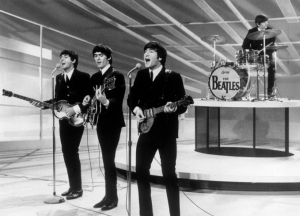
Lennon had already been working with the basic musical idea during the Beatles’ Get Back sessions in January 1969.
Two years later, the idea finally became the song people know today.
By then, the Beatles were gone.
Lennon was building his own identity as a solo artist.
And Imagine became the centerpiece of that new chapter.
Recording It Was Surprisingly Simple
The album was recorded primarily at Lennon and Ono’s home, Tittenhurst Park, in England.
They had built a recording studio on the property called Ascot Sound Studios.
The sessions began in June 1971.
Lennon worked with musicians including drummer Alan White and bassist Klaus Voormann, with Phil Spector involved in production alongside Lennon and Ono.
And Lennon took the meaning of the song seriously.
Alan White later recalled that Lennon made the musicians read the lyrics and understand what the song meant before they started playing.
Even the musicians could sense that something unusual was happening.
The song wasn’t complicated.
But it carried enormous weight.
Then It Became Something Much Bigger
“Imagine” was released as a single in October 1971.
The album had already established Lennon as a major solo artist, but the title track became something different.
It wasn’t simply another hit.
It became an anthem.
The album eventually reached No. 1 in the UK, while the song itself became the biggest-selling single of Lennon’s solo career.
And its meaning continued to evolve.
People began using it during moments of tragedy.
During peace demonstrations.
At memorial services.
At major international events.
The song appeared at Olympic ceremonies.
It became part of New Year’s Eve celebrations in New York.
It was performed by artists across generations.
A song that began as one man’s imagined future had become something millions of people could attach their own hopes to.
But There Was Always a Contradiction
There is something fascinating about “Imagine.”
The song asks people to imagine a world without possessions.
Yet it became one of the most commercially successful songs of its era.
It asks people to imagine a world without nationalism.
Yet it became deeply associated with particular countries and national events.
And it asks people to imagine a world without religion.
That line has been debated for decades.
Some people heard it as an attack on faith.
Others heard it as a plea to remove religious divisions that had been used to separate people.
Lennon himself explained that he wasn’t simply imagining a world where nobody believed in anything.
He was imagining a world without the idea that “my God is bigger than your God.”
That distinction helps explain why the song has remained so controversial—and so powerful.
People can disagree with the message while still understanding the hope behind it.
Then Time Changed the Meaning Again
Lennon was murdered in 1980.
After his death, “Imagine” took on another layer of meaning.
It was no longer simply the work of a famous musician imagining a better world.
It became connected to the memory of Lennon himself.
The song became something people returned to whenever the world felt particularly divided or painful.
And that helped turn it from a hit record into something much larger.
A cultural symbol.
More Than 50 Years Later
In 2023, the Library of Congress added “Imagine” to the National Recording Registry, recognizing recordings considered culturally, historically, or aesthetically significant to America’s recorded sound heritage.
The Library described it as a plea to move beyond materialism and nationalism toward worldwide peace.
Think about how strange that journey is.
A song that once presented an almost impossible vision had survived for more than five decades.
It had been debated.
Criticized.
Covered.
Performed at ceremonies around the world.
And passed from parents to children.
The piano melody remained instantly recognizable.
The message remained open to interpretation.
And people continued to argue about what Lennon was really asking them to imagine.
Why It Still Works
Maybe that’s the secret.
“Imagine” doesn’t tell you exactly what the future should look like.
It simply asks you to picture something different.
For someone who lived through the turbulence of the 1960s and early 1970s, the idea of peace carried enormous weight.
For someone hearing it decades later, the message can feel completely different.
But the basic question remains the same.
What if things didn’t have to stay the way they are?
That question never really gets old.
And perhaps that’s why the song has lasted.
John Lennon was sitting at a piano in 1971, taking ideas influenced by his wife, his own experiences, and his hopes for the world, and turning them into something remarkably simple.
He wasn’t predicting that the world would change.
He was asking people to imagine that it could.
More than half a century later, people are still doing exactly that.
And that’s what makes “Imagine” much more than just a famous song.
It became an idea set to music.
One that somehow managed to survive the man who wrote it.
And every time those first piano notes begin, the question comes back again:
What if we imagined something better?