
Old School Music
A Man Wrote This Song—Then a Woman Turned It Into a Powerful Anthem
SCROLL DOWN FOR THE FULL SONG
Some songs become hits.
Others become part of history.
But every once in a while, a singer takes a song that already exists, changes its meaning completely, and turns it into something so powerful that the world almost forgets there was an original version.
That is exactly what happened with one of the most recognizable songs in American music history.
A man recorded it first. His version was passionate, direct, and full of attitude. But when a woman recorded her own version two years later, she transformed it into a statement of independence, dignity, and self-respect.
Her recording became a cultural landmark.
And decades later, millions of people can still sing along to it.
But here is the question worth asking: Was her version so powerful that it completely overshadowed the original?
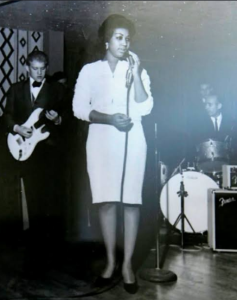
It Started With a Man Who Wanted Respect
In 1965, singer Otis Redding recorded a song called “Respect.”
At the time, Redding was already establishing himself as one of the most exciting voices in soul music. His singing was rough around the edges, full of emotion, and impossible to mistake for anyone else’s.
The song he recorded was straightforward. A man comes home after working hard and asks his partner for respect. He tells her that he gives her what she needs, and he expects to be treated properly in return.
Redding delivered the song with the intensity that made him famous.
It became a hit on the R&B charts and helped strengthen his reputation as a major soul performer.
But the song’s journey was far from over.
Two years later, another singer heard something in it that would change its place in music history forever.
She wasn’t interested in simply copying what Otis Redding had done.
She was going to make the song her own.
Then Aretha Franklin Changed Everything
In 1967, Aretha Franklin entered the studio to record her version of “Respect.”
She was already a gifted singer, but her career at Atlantic Records was about to reach an entirely new level.
Franklin approached the song differently from Redding. Instead of simply asking for respect within a relationship, her performance carried a confidence that made the message feel much bigger.
She wasn’t pleading.
She was demanding to be heard.
Her version included a few changes that became legendary. The spelling-out of “R-E-S-P-E-C-T,” the unforgettable backing vocals, and the repeated demand for respect gave the recording an identity of its own.
The arrangement was sharp and energetic. Every voice and instrument seemed to push the song forward.
And Franklin’s singing was extraordinary.
She could sound playful one moment and commanding the next. She could make a single word feel like an entire speech.
The song no longer sounded like just one person’s complaint about a relationship.
It sounded like a declaration.
The Little Changes That Made It Legendary
One of the most memorable parts of Franklin’s recording was the addition of the spelling-out section.
“R-E-S-P-E-C-T” gave listeners something they could immediately recognize, sing along with, and remember long after the music stopped.
The backing vocals added another layer of personality. The performance felt like a conversation, a celebration, and a challenge all at once.
Franklin also incorporated the phrase “sock it to me,” which became one of the recording’s signature moments.
These details helped distinguish her version from the original.
They were not simply decorative additions. They changed the energy of the entire song.
Redding’s recording had the feeling of a man asking for something he believed he deserved.
Franklin’s version sounded like a woman who already knew her worth.
That difference helped turn “Respect” into something far greater than a successful cover.
It became a statement that listeners could interpret through their own experiences.
Eight Weeks at Number One
When Aretha Franklin released “Respect” in 1967, the response was enormous.
The song reached number one on the Billboard Hot 100 and stayed there for two weeks. It also became one of the defining recordings of her career.
Franklin won widespread acclaim, and the song helped establish her as one of the most important voices in American music.
But its significance went beyond the charts.
The United States was experiencing profound social change. The civil rights movement had transformed national conversations about equality, while the women’s movement was challenging long-standing expectations about women’s roles in society.
Franklin’s version of “Respect” connected with that atmosphere.
Its message was simple enough for anyone to understand, yet powerful enough to carry different meanings for different people.
For some, it was about demanding fair treatment in a relationship.
For others, it became an anthem of dignity, equality, and independence.
The song never needed a complicated explanation.
Everyone understood the central demand.
Respect.
What Did Otis Redding Think of Her Version?
Here is one of the most interesting parts of the story.
Otis Redding was the man who recorded the song first, but Franklin’s version became so famous that it eventually overshadowed his recording in the public imagination.
Redding reportedly joked about Franklin’s version at the Monterey Pop Festival in 1967, describing it as a song that had been taken away from him by a friend.
The remark reflected the extraordinary success of her interpretation.
But it also illustrates something fascinating about music: a song can change dramatically depending on who performs it.
The lyrics may remain recognizable, but the singer’s voice, the arrangement, and the cultural moment can transform the entire experience.
Franklin didn’t erase the original.
She created a new interpretation that became iconic in its own right.
And the fact that people still debate the two versions is part of what makes the story so compelling.
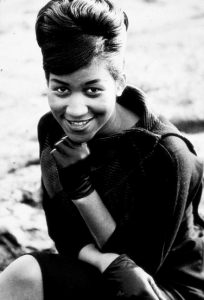
More Than a Hit Song
Over the decades, “Respect” has appeared on countless lists of the greatest songs ever recorded.
Aretha Franklin’s version is regularly celebrated as one of the defining performances in soul music. It has also become closely associated with her legacy as an artist who could combine technical brilliance with emotional force.
In 1987, Franklin became the first woman inducted into the Rock & Roll Hall of Fame.
Her recording of “Respect” remains one of the performances most closely associated with her name.
And its message has never gone out of date.
People still want to be heard. They still want to be treated fairly. They still want their contributions to matter.
That is why the song continues to connect with listeners who were not even born when it first became a hit.
The world has changed enormously since 1967.
But the demand at the heart of the song remains just as clear.
So, Which Version Deserves the Crown?
Now we come to the question that makes this story so interesting.
Otis Redding recorded “Respect” first. His version deserves recognition for introducing the song to the world.
But Aretha Franklin took that foundation and built something extraordinary on top of it. Her interpretation became a cultural landmark and helped define an entire era.
Both versions have their own character.
Redding’s recording has the raw intensity of classic soul. Franklin’s version has an explosive confidence that made it an anthem for generations.
One came first.
The other became legendary.
And perhaps that is the beauty of music. Sometimes a great song doesn’t belong to just one moment, one performer, or one interpretation. It grows as different artists bring their own experiences to it.
Aretha Franklin did not need to pretend the original never existed. She simply proved that a great song could become something even bigger in the right hands.
So now, think back to the first time you heard “Respect.”
Was it Aretha Franklin’s unforgettable performance? Or did you discover Otis Redding’s original first?
And when you compare them today, which one do you believe deserves the crown?
Aretha Franklin’s legendary version—or Otis Redding’s original?
There is no denying that both artists left their mark on music history.
But we want to know what you think.