
Old School Music
He Thought He Was Over Her—Then He Saw Her Again. What Happened Next Became One of the Saddest Songs Ever Recorded.
SCROLL DOWN FOR THE FULL SONG
There are some people you believe you have finally forgotten.
You go on with your life. You meet new people. You tell yourself that the past belongs where it is, and that whatever you once felt has slowly disappeared.
Then, one unexpected moment changes everything.
You see that person again. Perhaps they smile at you. Perhaps they walk past without saying a word. And suddenly, memories you thought were long gone return with a force you never expected.
That is the feeling at the heart of one of the most emotional recordings of the 1960s.
It is a song about seeing someone you once loved and discovering that the heart has not caught up with the passing years.
The voice behind it could sound powerful enough to fill a concert hall, yet vulnerable enough to make a single listener feel as though the singer were sitting beside them.
His name was Roy Orbison.
And the song was “Crying.”
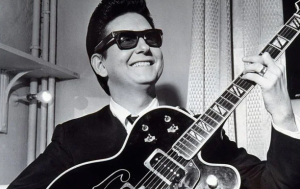
The Man With the Unforgettable Voice
By the early 1960s, Roy Orbison was developing a sound unlike almost anyone else in popular music.
While many singers relied on energetic performances and confident, uncomplicated love songs, Orbison often explored the darker side of romance.
His songs were filled with longing, regret, heartbreak, and the fear of losing someone who meant everything.
And then there was his voice.
Orbison could move from a quiet, almost conversational delivery to soaring high notes that seemed to emerge from somewhere deep inside him.
He could make a song feel intimate one moment and overwhelming the next.
His performances were not about pretending to be invincible. They often sounded like a person trying to remain composed while emotions threatened to take over.
That ability became his signature.
But what made his music so powerful was not simply how high he could sing. It was how convincingly he could communicate the feelings behind the words.
In “Crying,” he would take one familiar human experience and turn it into something unforgettable.
The Moment That Inspired the Song
Roy Orbison wrote “Crying” with songwriter Joe Melson, his frequent collaborator during that period.
The song was released in 1961, and its emotional story centered on a painful realization: sometimes, seeing someone again can bring back feelings you thought you had finally overcome.
Imagine believing you have moved on from a relationship.
You have spent months, perhaps years, trying to put it behind you. You have accepted that the relationship is over. You may even have convinced yourself that you no longer care.
Then you unexpectedly encounter the person again.
For a moment, you are transported back to another time. You remember the conversations, the closeness, the plans you once made, and the future you imagined together.
And suddenly, the past does not feel so distant anymore.
That is the emotional tension running through the song.
The narrator is not simply mourning a relationship that ended. He is confronting the discovery that his feelings remain alive.
The encounter forces him to face something he would rather not admit.
He may have continued living without that person, but he has not necessarily stopped loving them.
The song captures that uncomfortable moment when the heart reveals what the mind has been trying to deny.
Why the Song Feels So Real
One of the most remarkable things about “Crying” is the way the music follows the emotion.
It begins with restraint. Orbison’s voice carries a sense of reflection, as though the narrator is looking back at something that happened long ago.
But as the song progresses, the emotion becomes harder to contain.
The melody rises. The performance grows more intense. The listener can feel the narrator’s composure beginning to break.
Then comes the moment when Orbison’s voice reaches those extraordinary heights.
It is not simply a technical display. The high notes make the emotion feel physical, as though the singer can no longer keep his feelings inside.
That is why the recording remains so powerful.
Orbison does not sing heartbreak as an abstract idea. He makes it sound like something happening in the moment.
And even listeners who have never experienced the exact situation described in the song can recognize the feeling.
Almost everyone knows what it is like to remember someone unexpectedly.
Almost everyone has experienced a moment when an old photograph, a familiar place, or a chance encounter brings back emotions they thought had disappeared.
Sometimes, the memory lasts only a few seconds.
But those seconds can be enough to remind us that moving forward does not always mean forgetting.
A Hit That Showed What Roy Orbison Could Do
“Crying” became one of Orbison’s signature songs and helped establish his reputation as one of the great vocal performers of his generation.
Released as a single in 1961, it reached No. 2 on the Billboard Hot 100 in the United States.
The recording demonstrated how a song could build its impact through emotion rather than speed or volume.
It also showed the strength of Orbison’s partnership with Joe Melson. Together, they created songs that combined memorable melodies with dramatic emotional storytelling.
Orbison’s musical world was often filled with people who loved deeply and suffered quietly.
They were not always able to explain what they felt. They could not always repair what they had lost.
But they could sing.
And through that music, listeners found a way to express feelings that might otherwise have remained unspoken.
For many people, Orbison’s songs became part of the soundtrack to their own relationships.
They were played on radios, heard during long drives, and remembered years after the moments that first made them meaningful.
“Crying” became one of those songs that could instantly transport a listener to another time.
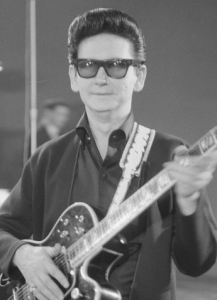
The Tragedy That Followed
Orbison’s life was not without extraordinary personal hardship.
In 1966, his wife, Claudette, died in a motorcycle accident. Two years later, in 1968, a fire destroyed his home in Tennessee and claimed the lives of two of his three eldest sons.
These tragedies were devastating, and they became part of the broader story of a musician whose public performances often carried such profound sadness.
It is important, however, not to confuse those later losses with the specific story of “Crying.” The song had been written and released years earlier.
Its original subject was the pain of encountering a former love and discovering that the feelings had not disappeared.
Still, knowing something about Orbison’s life can make his performances feel even more affecting.
He was a man who experienced tremendous success, but he also endured losses that no amount of fame could undo.
His voice could communicate sorrow without needing to explain its source.
Perhaps that is one reason his music continues to move people who discover it decades after its original release.
A New Generation Discovers the Song
For many years, “Crying” remained a defining recording of Orbison’s career.
Then, in 1987, the song found a remarkable new life through a duet with Canadian singer k.d. lang.
Their version brought Orbison’s music to another generation of listeners. It also offered a different kind of emotional experience.
Lang’s voice blended beautifully with Orbison’s, creating a performance that felt both intimate and expansive.
The duet received widespread acclaim and won the Grammy Award for Best Country Vocal Collaboration in 1989.
For listeners who already loved the original recording, it was a chance to hear a familiar song in a new light.
For younger audiences, it was an introduction to the extraordinary voice of Roy Orbison.
The song had crossed decades without losing its emotional power.
That is a rare achievement.
Music can become associated with a particular era, a fashion, or a sound that eventually feels dated. But songs built around fundamental human experiences often find ways to survive.
Heartbreak does not belong to one generation.
Neither does the feeling of seeing someone again and realizing that the past still has a hold on you.
Can You Ever Truly Forget Someone?
That question sits at the center of “Crying.”
We often talk about moving on as though it were a clean, simple process.
A relationship ends. Time passes. We heal. Eventually, we stop thinking about the person who once occupied so much of our lives.
Sometimes that is exactly what happens.
But other times, the process is more complicated.
You can accept that a relationship is over and still feel something when you hear the person’s name.
You can build a happy life and still remember someone who once mattered deeply to you.
You can even believe that you have completely moved on, only to discover that an unexpected encounter brings back a feeling you thought was gone.
That does not necessarily mean you should return to the past.
It does not mean the relationship was meant to last, or that you made the wrong decision by leaving it behind.
It simply means that emotions do not always follow the same timetable as our decisions.
Sometimes, people leave our lives but remain part of our memories.
And sometimes, a song helps us acknowledge that truth without judging ourselves for it.

The Lasting Power of “Crying”
More than six decades after its original release, “Crying” remains one of Roy Orbison’s most celebrated recordings.
Its enduring appeal comes from the combination of an unforgettable melody, a remarkable vocal performance, and a story that feels painfully familiar.
Orbison and Joe Melson did not need an elaborate plot to make the song work.
They built it around a moment that many people understand: the discovery that the heart can hold on to something long after we believe we have let it go.
And Orbison delivered that feeling with a voice that could make vulnerability sound almost heroic.
He showed that heartbreak does not always look like anger or despair. Sometimes, it appears in a quiet moment when a person realizes they are not as over someone as they thought.
That realization can hurt.
But it can also remind us that what we felt was real, even if the relationship itself could not last.
Perhaps that is why people continue returning to this song.
It gives a voice to the emotions we sometimes hide from others, and even from ourselves.
It reminds us that remembering someone is not the same as wanting to go back.
And it shows us that a song recorded decades ago can still understand something about our lives today.
So here’s the question: If you unexpectedly saw the person you once loved most, would you feel nothing—or would all those old feelings come rushing back?
Some people never forget their first love.
Others remember the one they had to let go.
And sometimes, the hardest truth is admitting that a chapter can be over without the memories ever completely disappearing.