
Old School Music
A Stranger Sat Beside Him on a Train and Shared Life Advice That Millions Would Never Forget
SCROLL DOWN FOR THE FULL SONG
Sometimes, the most important lessons in life come from people we barely know.
A stranger sits beside us. A conversation begins. And before we realize it, a few simple words have changed the way we think about everything.
That is the feeling behind one of the most recognizable country songs ever recorded.
It tells the story of a man traveling on a train who meets an older stranger. The stranger has lived long enough to understand that life is not about winning every battle. It is about knowing which battles are worth fighting in the first place.
His advice sounds like it belongs at a card table. But underneath the references to gambling lies something much deeper: a lesson about love, pride, patience, and knowing when it is time to move on.
When Kenny Rogers recorded the song, he helped turn that simple message into an American classic.
But the story of how the song came to be is almost as remarkable as the message itself.
A Songwriter With an Unusual Idea
The man behind the song was Don Schlitz, a young songwriter who was working to establish himself in Nashville.
In 1976, Schlitz wrote a song built around a conversation between two strangers on a train. One is a younger man searching for direction. The other is an experienced gambler who has learned a great deal about life through the cards he has played.
Rather than delivering a long speech about how to live, the older man offers his wisdom through the language of gambling.
Know when to take a chance. Know when to protect what you have. Recognize when a situation is no longer worth your effort.
It was a clever idea because the advice could be understood on two levels.
On the surface, the song was about a gambler explaining his craft. Beneath that, it was about the decisions every person must make.
Relationships can be like that. So can careers, friendships, and the dreams we spend years chasing.
Sometimes we hold on because we believe quitting means failure. Other times, we walk away too quickly because something becomes difficult.
The gambler’s wisdom suggests that experience teaches us to recognize the difference.
Schlitz had created something memorable. But getting the song into the right hands would take time.
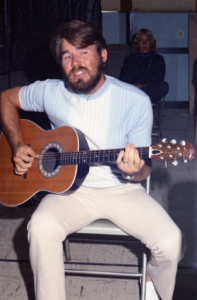
The Song That Had to Find Its Voice
A great song does not always become a hit immediately.
Sometimes it needs the right singer. Sometimes it needs the right arrangement. And sometimes it takes years before an audience is ready to hear it.
“The Gambler” did not become Kenny Rogers’ signature song the moment it was written.
The song was recorded by several artists before Rogers released his version in 1978. Country singer Bobby Bare recorded it first, and Johnny Cash also recorded it before Rogers’ famous version appeared.
But Rogers brought something special to the material.
By the late 1970s, he had developed a distinctive voice that could sound warm, weathered, and conversational. He did not need to shout to make a point. He could deliver a line as though he were sitting across the table from the listener, sharing something he had learned the hard way.
That quality was perfect for a song built around a conversation.
Instead of making the gambler sound like a distant character in a story, Rogers made him feel like someone you might actually meet.
The performance had the relaxed confidence of a man who had already made his mistakes and no longer needed to prove anything.
And suddenly, the song’s advice felt personal.
What the Gambler Was Really Teaching
The genius of the song lies in the way it uses a card game to explain human behavior.
The gambler understands that every decision has consequences. You cannot control every card you are dealt. You cannot guarantee that every risk will pay off. And you cannot expect every situation to turn out the way you planned.
But you can learn to recognize what is happening.
You can decide when to keep trying and when your efforts are no longer helping you.
That is a lesson many people spend decades learning.
Think about someone who stays in an unhappy relationship because they have already invested years in it. Or someone who refuses to leave a failing business because admitting defeat feels unbearable.
There is a difference between persistence and stubbornness.
Persistence means continuing when something matters and there is still a worthwhile path forward.
Stubbornness means refusing to accept reality because you cannot bear the thought of being wrong.
The gambler’s advice encourages people to look at their circumstances honestly.
It does not mean abandoning everything at the first sign of trouble. It means understanding that wisdom is not simply about knowing how to fight. It is also about knowing when fighting no longer makes sense.
That message helped the song reach far beyond country music fans.
You did not need to know anything about poker to understand it.
You only needed to have lived a little.
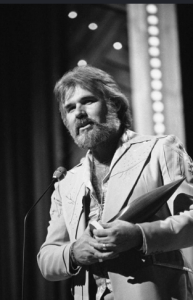
Kenny Rogers Made It His Own
Kenny Rogers was already an established performer when he released his version of “The Gambler.”
He had spent years in the music business, including his time with the First Edition, before building an enormously successful solo career.
His voice was instantly recognizable. It carried a mixture of confidence and vulnerability that worked particularly well with songs about ordinary people facing difficult choices.
Rogers understood how to make a story feel believable.
He could sing about a lonely man, a complicated relationship, or a hard-earned lesson without making the performance feel theatrical.
With “The Gambler,” that approach was essential.
The song needed to sound like a story being passed from one generation to another. The listener had to believe that the older man had experienced enough disappointment to earn his wisdom.
Rogers delivered that feeling.
His version became a major country hit and won the Grammy Award for Best Male Country Vocal Performance in 1980.
It also helped cement his place among the defining country artists of his era.
For many listeners, the song became inseparable from Rogers himself.
Even people who could not name the songwriter often recognized the voice within seconds.
From a Country Hit to a Television Phenomenon
The song’s popularity eventually led to something unusual.
In 1980, Kenny Rogers starred in a television film inspired by the song, titled Kenny Rogers as The Gambler.
Rogers played Brady Hawkes, a professional gambler who becomes involved in adventures across the American West.
The film was successful enough to produce several sequels, turning the song’s central character into a recurring figure on television.
That was an extraordinary journey for a song that began as a songwriter’s idea about two men talking on a train.
Its message had become so recognizable that audiences were willing to follow the character into an entirely different medium.
The song was no longer just something people listened to on the radio. It had become part of a larger American cultural memory.
For people who watched those television films, hearing the familiar song could bring back memories of evenings spent in front of the television, long before streaming services and endless online entertainment.
It belonged to a time when a popular television movie could become a shared experience across millions of households.
Why the Song Still Matters
Decades after its release, the song continues to resonate because its central lesson never becomes outdated.
Every generation faces uncertainty.
People still fall in love with the wrong person. They still take risks that do not pay off. They still struggle to decide whether to stay, leave, forgive, or begin again.
And people still learn, sometimes painfully, that experience is not the same as wisdom.
Experience is what happens to us.
Wisdom is what we understand from it.
The gambler in the song has clearly experienced disappointment. He has learned that luck cannot be trusted completely and that pride can become expensive.
His advice is not about becoming cold or refusing to take chances. It is about approaching life with open eyes.
There are moments when we must take a risk.
There are moments when we must stand our ground.
And there are moments when the strongest decision is to accept that something has run its course.
The difficult part is knowing which moment we are facing.
That is why the song feels less like a lecture and more like a conversation with someone who has already made a few mistakes.
It offers no complicated theory. It simply asks us to pay attention.
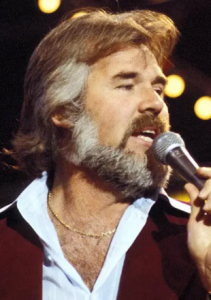
The Lesson We Learn as We Get Older
When we are young, we often believe that success comes from pushing harder than everyone else.
We think that if we work long enough, love someone enough, or refuse to give up, we can force almost any outcome.
Sometimes that determination is exactly what we need.
But as the years pass, many of us discover that life does not always reward persistence in the way we expect.
Some doors never open. Some people never change. Some opportunities disappear no matter how badly we want them back.
Learning to accept those realities can be painful.
Yet it can also bring freedom.
You stop wasting your life trying to control what was never yours to control. You begin recognizing where your energy matters. And you learn that walking away from the wrong situation can create room for something better.
Perhaps that is the real reason “The Gambler” became such an enduring classic.
It takes a complicated truth and wraps it inside a story that almost anyone can understand.
A younger man meets an older stranger. The stranger shares what experience has taught him. And the younger man is left with advice that may prove more valuable than any winning hand.
Don Schlitz wrote the song. Kenny Rogers gave it the voice that made it famous. And listeners carried its message into their own lives.
Some songs entertain us for three minutes.
Others leave us thinking about decisions we made years ago—and the decisions still waiting for us tomorrow.
So here’s the question: What’s the best piece of life advice someone ever gave you? And did you understand its value at the time, or only years later?
Sometimes, the wisest words come from a stranger.
And sometimes, we spend the rest of our lives learning what they meant.