
Old School Music
He Walked Onto a Prison Stage With a Song He Barely Knew—Then the Crowd Went Wild
SCROLL DOWN FOR THE FULL SONG
He walked onto a prison stage with a song he’d barely had time to learn—and within minutes, the prisoners were roaring with laughter and applause. What happened next turned that strange song into one of the biggest hits of his career.
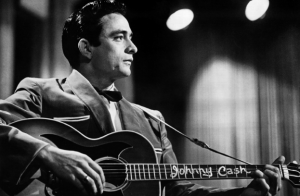
It was January 1969, and Johnny Cash was about to perform at San Quentin State Prison in California.
Cash had performed in prisons before.
He understood that the audience was different.
These weren’t polite theater crowds sitting quietly in their seats.
These were inmates who had come to see one of the biggest stars in country music.
And Cash wanted to give them a show they would remember.
But he had something new.
A strange, funny song about a boy whose father gave him a name that would cause him trouble for the rest of his life.
The song had been written by Shel Silverstein.
And Cash hadn’t even properly learned all of it yet.
A Song With a Strange Story
The idea was simple.
A father disappears, leaving his son with one final gift:
A name.
Sue.
The boy grows up being mocked and bullied because of it.
Eventually, he becomes determined to find his father and demand an explanation.
It’s ridiculous.
It’s funny.
And then it turns into a revenge story.
The song was completely different from the serious country material Cash was known for.
But Cash immediately saw something in it.
There was one problem.
He didn’t have much time to prepare.
He Needed the Lyrics
Cash’s wife, June Carter, had received a copy of the lyrics.
Cash took them with him.
The problem was that the performance at San Quentin was happening quickly, and he hadn’t had the opportunity to memorize the entire song.
So he kept the lyrics nearby and worked from them during the performance.
Then he walked onto the stage.
In front of hundreds of prisoners.
And started singing.
The Prisoners Loved It
The reaction was immediate.
The prisoners laughed.
They shouted.
They applauded.
And Cash fed off the energy.
Instead of treating the song like a joke he was simply getting through, he performed it like a story.
A man searching for the father who had abandoned him.
A ridiculous name.
Years of fighting.
And finally, a confrontation between father and son.
The audience couldn’t get enough.
You can actually hear the reaction in the recording.
The laughter.
The cheering.
The applause.
It gives the performance something a studio recording never could.
You aren’t just hearing the song.
You’re hearing a room full of people discovering it at the same time.
Then Came the Recording
The performance was recorded.
And when the live album from San Quentin was released, the song immediately stood out.
Radio stations began playing it.
Listeners loved the humor.
They loved the story.
And they especially loved hearing Cash perform it in front of a prison audience.
The live recording became a massive hit.
It reached the top of the country charts and crossed over into the mainstream.
For Johnny Cash, it became one of the signature recordings of his career.
But There Was More Behind the Joke
What made the song work wasn’t just the comedy.
There was something underneath it that Cash understood.
The character in the song is forced to become tough because of circumstances he didn’t choose.
He gets mocked.
He gets beaten up.
He grows angry.
And eventually, he becomes determined to survive.
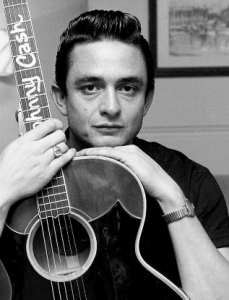
That made the song fit Johnny Cash surprisingly well.
Cash had always been drawn to stories about outsiders, prisoners, drifters, people who didn’t quite fit into polite society.
And now he had a funny story about one of them.
San Quentin Made It Special
The song could have been recorded in a studio.
It could have been polished.
It could have sounded perfect.
But the live performance at San Quentin gave it something else.
Personality.
You can hear the audience reacting to every twist in the story.
When Cash delivers the punchlines, the prisoners respond.
When the story reaches its final confrontation, the room comes alive.
It’s almost like the audience becomes part of the song.
And that’s why the recording remains so memorable.
More Than Fifty Years Later
The performance happened more than half a century ago.
Yet the song still works.
The story is still funny.
The chorus is still instantly recognizable.
And the idea behind it is still easy to understand.
A kid gets stuck with a ridiculous name.
He grows up angry about it.
He searches for the man responsible.
And eventually, he gets his answer.
It’s a simple story.
But Cash knew how to make simple stories unforgettable.
One Prison Performance Changed Everything
Johnny Cash walked into San Quentin with a song he hadn’t even completely memorized.
He walked out with a recording that would become one of the most famous performances of his career.
The audience couldn’t have known they were helping create a piece of music history.
They were simply having a good time.
Laughing.
Shouting.
Cheering.
And singing along with a man telling them the ridiculous story of a boy named Sue.
Sometimes the greatest recordings aren’t created in perfect studios.
Sometimes they happen in unexpected places, in front of unexpected audiences, when nobody knows exactly what is about to happen.
And that night at San Quentin, Johnny Cash found one of those moments.