Old School Music
They Told Him Not to Release This Song—Then It Became an Anthem for Millions
His record company told him not to release this song—but he refused to let it go. What started as a deeply personal reaction to a troubled world became an anthem that millions of people still know today.
In the early 1970s, America was going through a difficult period.
The Vietnam War was still raging. Protests filled American streets. Families were divided over politics. Violence was appearing on television almost every night.
And Marvin Gaye was watching all of it.
But the war wasn’t just something happening somewhere far away.
His brother Frankie had served in Vietnam and eventually returned home. Marvin heard stories about what he had experienced, and those conversations affected him deeply.
At the same time, Marvin was going through his own problems.
His relationship with his father had become increasingly strained. His marriage was troubled. And the world around him seemed to be getting darker by the day.
He began asking himself a simple question:
What was happening to the world?
It Started With a Conversation
The idea for the song didn’t begin with Marvin alone.
Motown songwriter Renaldo “Obie” Benson had witnessed violence and protests while touring with his group. After seeing police confront protesters, he began working on a song that asked why people couldn’t simply get along.
He brought the idea to Marvin.
Marvin immediately connected with it.
He felt there was something much bigger inside those questions.
Instead of simply writing another love song, he wanted to talk about war, violence, poverty, suffering, and the desperate need for peace.
And he wanted to do it without preaching.
He wanted people to feel it.
Motown Didn’t Want It
This is where the story gets crazy.
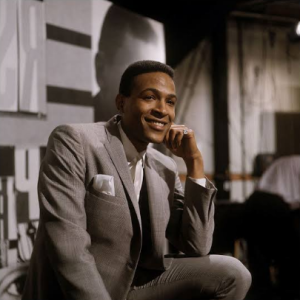
Marvin recorded the song and believed strongly in it.
But Berry Gordy, the head of Motown, wasn’t convinced.
Motown had built its reputation on hit records that were designed to entertain. Political and social commentary was a much riskier direction.
Gordy reportedly considered the song the wrong kind of record for Marvin.
But Marvin wouldn’t back down.
He believed the song had something important to say.
And eventually, he got his way.
Then America Heard It
When the record was released in 1971, listeners immediately noticed that something had changed.
This wasn’t the Marvin Gaye many people expected.
There was no simple romance at the center of it.
Instead, there was pain.
There was confusion.
There was a question that seemed almost impossible to answer:
What’s going on?
The song didn’t tell listeners exactly what to think.
It simply asked them to look around.
To look at the war.
To look at the violence.
To look at the suffering.
And to wonder whether humanity could do better.
It Became Much Bigger Than a Hit
The song quickly became one of Marvin Gaye’s signature recordings.
But its influence went far beyond the charts.
It became an anthem.
An anthem for people who were tired of violence.
An anthem for people questioning war.
An anthem for people who wanted peace.
And an anthem for anyone who looked at the world and wondered how things had gotten so bad.
The remarkable thing is that the song never sounded angry in the way you might expect.
Marvin sang it with sadness.
With compassion.
Almost like someone pleading with the world to slow down and listen.
That made it even more powerful.
More Than 50 Years Later
The world Marvin was singing about has changed in countless ways.
But the questions haven’t disappeared.
People still worry about war.
People still see violence on the news.
People still argue about politics.
People still wonder why human beings continue hurting one another.
And that’s why the song never really went away.
Generations who weren’t even alive when it was recorded eventually discovered it.
The melody became instantly recognizable.
The question at the center of it became timeless.
What’s going on?
He Took a Risk
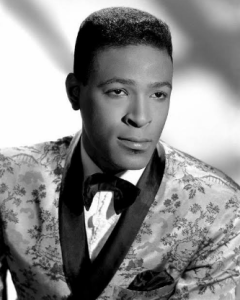
Marvin Gaye could have stayed with the formula that had already made him successful.
He could have made another love song.
Another record that was safe for radio.
Instead, he took a chance on something deeply personal.
He pushed against the people around him.
He fought to release a song his own record company didn’t initially want.
And he ended up creating something far bigger than a hit.
He created a song that gave people a voice.
Sometimes the most powerful songs aren’t the ones that tell you what to believe.
They’re the ones that make you stop, listen, and ask the question yourself.
More than five decades later, people are still doing exactly that.