
Old School Music
He Recorded This Song Almost as an Afterthought—Then a DJ Started Playing It, and It Became One of the Biggest Hits of 1971
In 1971, Rod Stewart was trying to establish himself as a solo star.
He already had a reputation as a talented singer, and he was performing with the rock band Faces.
But his solo career hadn’t yet reached the heights he was hoping for.
Then he recorded a song that almost didn’t make it onto his album.
His record company wasn’t particularly impressed with it.
Stewart himself wasn’t convinced it was anything special.
And when the song was finally released as a single, it wasn’t even the main attraction.
It was the B-side.
But somewhere in America, a radio DJ decided to flip the record over.
He played the song nobody was expecting to become a hit.
And suddenly, everything changed.
The song was “Maggie May.”
He Almost Left It Off the Album
By 1971, Stewart was working on his third solo album, Every Picture Tells a Story.
He was developing his own sound, combining rock, folk, and blues influences.
But “Maggie May” wasn’t exactly what the record company had in mind.
The song was unusual.
It didn’t follow a conventional pop structure.
It had an extended instrumental introduction, an acoustic guitar, and a mandolin that gave it a distinctive sound.
Even Stewart wasn’t completely convinced.
He later recalled that someone he knew had told him the song didn’t really have a melody.
For a moment, he wondered whether they were right.
But the album needed another track.
So “Maggie May” stayed.
Nobody involved could have predicted what would happen next.
The Story Behind the Song Was Personal
Although the song sounds like a straightforward story about a young man’s romantic experience, its inspiration came from Stewart’s own life.
When he was around 16, he attended the Beaulieu Jazz Festival in England.
Stewart later described an encounter with an older woman that became part of the inspiration for the song.
Years afterward, he used that memory to help create the story of a young man involved with an older woman.
The narrator is inexperienced.
He’s emotionally attached.
And as he looks back on the relationship, he realizes that things weren’t quite what he imagined.
There’s affection in the song, but there’s also regret.
The narrator feels that he has been led into something he wasn’t prepared for.
And now he’s struggling with the consequences.
That combination of humor, nostalgia, and heartbreak gave the song its personality.
It wasn’t simply a love song.
It was a story about growing up, making mistakes, and looking back on an experience that changed you.
Then Came the Recording
Stewart recorded the song with musicians who helped create its distinctive sound.
Martin Quittenton contributed to the songwriting and played acoustic guitar.
Ian McLagan played keyboards.
Ronnie Wood contributed guitar and bass parts.
And Ray Jackson of the British folk-rock band Lindisfarne played the mandolin.
That mandolin introduction became one of the most recognizable parts of the recording.
It’s bright and almost cheerful.
But it also gives the song a slightly bittersweet quality.
The music sounds like a memory.
Something from years ago that you can still picture clearly, even if you no longer understand why it affected you so much.
The recording wasn’t polished into a typical pop production.
It had a loose, natural feeling.
And that became part of its charm.

The Record Company Chose Another Song
When the single was released in 1971, “Maggie May” wasn’t supposed to be the main attraction.
The intended A-side was Stewart’s version of Tim Hardin’s song “Reason to Believe.”
“Maggie May” was placed on the B-side.
At the time, that decision made sense to the people responsible for releasing the record.
“Reason to Believe” was a recognizable song with a more conventional structure.
“Maggie May” was longer, less predictable, and built around a story that unfolded gradually.
Nobody expected it to become a massive radio hit.
But record companies didn’t control every decision radio DJs made.
And one DJ was about to change the song’s future.
One DJ Flipped the Record Over
A radio DJ in Cleveland began playing “Maggie May” instead of the intended A-side.
The reaction was immediate.
Listeners responded to the song.
Radio stations began giving it more attention.
And the record company suddenly found itself with a hit it hadn’t originally planned to promote.
Stewart later recalled how a DJ in Cleveland had taken the initiative and turned the record over.
That simple decision helped change the course of his solo career.
As more stations began playing the song, its popularity continued to grow.
The B-side was becoming the main event.
And the record company eventually reversed the billing to reflect what audiences wanted to hear.
Then It Reached No. 1
“Maggie May” climbed the charts throughout the summer and early autumn of 1971.
On October 2, it reached No. 1 on the Billboard Hot 100 in the United States.
It remained there for five weeks.
The song also reached No. 1 in the United Kingdom.
At the same time, Stewart’s album Every Picture Tells a Story reached the top of the album charts on both sides of the Atlantic.
It was an extraordinary achievement.
Stewart had a No. 1 single and a No. 1 album simultaneously in both countries.
The song that had almost been left off the album had become the defining hit of his early solo career.
And it had happened partly because one radio DJ decided to play the other side of a record.
The Hit Changed His Career
Before “Maggie May,” Stewart was already respected as a singer.
But the song introduced him to a much wider audience.
It helped establish him as a major solo artist rather than simply the frontman of Faces.
His distinctive voice became familiar to millions of listeners.
His rough, slightly raspy delivery gave the song a personality that was difficult to imitate.
He sounded like someone telling you a story from his own past.
Not someone trying to deliver a perfect pop performance.
That was part of the appeal.
He sounded human.
And the song felt like something that could have happened to someone you knew.
The Strange Thing About Its Success
Think about how close the song came to being overlooked.
Stewart wasn’t certain it was good enough.
The record company preferred another track.
The single was released with “Maggie May” on the B-side.
And the song might have remained an album track known mainly to dedicated fans.
Instead, a DJ played it.
Listeners responded.
Other stations followed.
And within months, Stewart had one of the biggest hits of the year.
It’s a reminder that even the people making the music don’t always know which song will connect with an audience.
Sometimes the song everyone expects to succeed doesn’t.
And sometimes the one nobody is paying attention to becomes the biggest of them all.
More Than 50 Years Later
Today, “Maggie May” remains one of Rod Stewart’s signature songs.
The mandolin introduction is instantly recognizable.
The acoustic guitar gives it a warm, nostalgic sound.
And Stewart’s voice carries the story with the same rough-edged charm that made the original recording so distinctive.
The song has survived because it captures something familiar.
The experience of looking back on your younger years and realizing how little you understood at the time.
When you’re young, you believe you know everything.
You fall for someone.
You make decisions.
You think you understand what love means.
Then time passes.
You look back and realize that things were more complicated than you thought.
Sometimes you laugh about it.
Sometimes you regret it.
And sometimes you remember it with a strange mixture of affection and embarrassment.
“Maggie May” captures all of that.
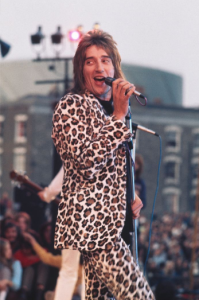
The Song Nobody Expected Became the One Everyone Remembered
There’s something fitting about the way this story unfolded.
A song about looking back on a complicated experience became a major hit almost by accident.
The people responsible for releasing it didn’t recognize its potential immediately.
Stewart himself had doubts.
But a radio DJ heard something worth sharing.
And listeners agreed.
A song that nearly disappeared into the background became one of the defining recordings of 1971.
It helped turn Rod Stewart into a solo superstar.
It topped charts in America and Britain.
And it gave generations of listeners a song that still sounds familiar from the first few notes.
All because someone decided to turn a record over.
Sometimes a career-changing moment doesn’t arrive with a grand announcement.
Sometimes it comes from a decision nobody else thinks matters.
A song placed on the wrong side of a record.
A DJ willing to take a chance.
And an audience that hears something special.
Rod Stewart didn’t expect “Maggie May” to become a classic.
But in 1971, one radio DJ gave it a chance.
And the rest became music history.