
Old School Music
He Wrote This Song Almost as a Joke—Then It Became His Band’s Biggest Hit
In the mid-1970s, Kerry Livgren wasn’t trying to write a hit song.
He wasn’t sitting in a studio trying to create something that would dominate the radio.
He wasn’t even sure the song belonged with his band.
It started at home.
Livgren had been experimenting with a simple acoustic guitar piece.
It was quiet.
It was completely different from the complicated progressive-rock music Kansas had become known for.
Then one of his bandmates heard it.
And suddenly, the little song Livgren had barely taken seriously started becoming something much bigger.
That song was “Dust in the Wind.”
It Started With an Acoustic Guitar
Livgren was the principal songwriter and guitarist for Kansas.
The band was known for elaborate arrangements, long instrumental passages, and progressive rock.
But Livgren had been experimenting with something much simpler.
He was playing an acoustic guitar at home when his wife heard him.
She liked what she heard.
Then she encouraged him to develop it.
Livgren eventually played the song for Kansas vocalist and violinist Robby Steinhardt.
Steinhardt immediately recognized that there was something special about it.
The band began working on it.
And the song slowly transformed from something Livgren had been casually playing into a finished recording.
The Lyrics Came From an Unexpected Place
The words were inspired by a collection of poetry.
Livgren had been reading poetry written by a friend named William Greiner.
One poem contained imagery about the temporary nature of human life.
The idea stayed with Livgren.
Everything people spend their lives chasing eventually disappears.
Money.
Fame.
Possessions.
Success.
Even our own lives.
That became the central idea behind “Dust in the Wind.”
The song wasn’t really about tragedy.
It was about perspective.
It asked a simple question:
What actually lasts?
It Was Completely Different From Kansas
This was a strange song for Kansas.
The band had built its reputation on progressive rock.
Their music could be complicated and dramatic.
There were electric guitars, violin, keyboards and long instrumental sections.
“Dust in the Wind” was almost the opposite.
Acoustic guitar.
Soft vocals.
A little percussion.
And a gentle violin line.
There was no giant rock riff carrying the song.
The arrangement left plenty of space.
That simplicity was exactly what made it work.

They Almost Didn’t Record It
The song wasn’t originally intended to become a Kansas single.
Livgren didn’t think of it as the kind of song the band would record.
It was almost a personal experiment.
But after hearing it, the other members of the band encouraged him to bring it into the studio.
They recorded it for their 1977 album Point of Know Return.
And when the band heard the finished recording, they realized they had something very different.
The song had a quality that their more complicated material didn’t have.
It was immediately understandable.
You didn’t need to be a progressive-rock fan.
You didn’t need to understand complicated arrangements.
You just needed to listen.
Then the Radio Got Hold of It
Kansas released “Dust in the Wind” as a single in early 1978.
The reaction was enormous.
The song eventually reached No. 6 on the Billboard Hot 100.
For Kansas, it became their biggest-selling single.
The band that had built its reputation on progressive rock had suddenly found its biggest audience with one of its quietest songs.
And it wasn’t even the song they originally expected to be the centerpiece of the album.
The Song Was About Something Everyone Understood
That was probably the secret.
The lyrics weren’t tied to one specific relationship.
There wasn’t a complicated story that required explanation.
The song simply asked people to think about how temporary life really is.
You can spend decades building a career.
You can collect money.
You can buy a beautiful house.
You can become famous.
But eventually, none of it comes with you.
Everything passes.
Everything changes.
And eventually, everything becomes part of the past.
That’s a heavy idea.
But Livgren presented it in a remarkably beautiful way.
The Timing Was Perfect
The late 1970s were filled with huge rock productions.
Music was getting louder.
Bigger.
More elaborate.
But “Dust in the Wind” went in the opposite direction.
It was quiet.
It was reflective.
It sounded almost timeless.
And that gave it a completely different kind of power.
People could listen to it alone.
They could play it late at night.
They could hear it after losing someone.
They could hear it while thinking about their own lives.
It didn’t tell them what to feel.
It simply gave them something to think about.
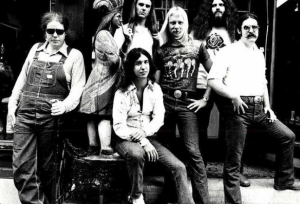
Kerry Livgren Was Still Young
Livgren was in his late twenties when he wrote the song.
He wasn’t an old man looking back on an entire lifetime.
He was still young.
His career was growing.
Kansas was becoming successful.
The band was playing bigger venues.
And yet he was already thinking about how quickly everything disappears.
That contrast is part of what makes the song so interesting.
You don’t have to be old to understand that life moves quickly.
Sometimes you realize it when you’re young.
Sometimes it takes losing someone.
Sometimes it happens when you look at your children and realize how quickly they grew up.
And sometimes it happens when you look at old photographs and realize that an entire period of your life is gone.
The Song Became Bigger Than Kansas
Over the years, “Dust in the Wind” became one of those songs that seemed to escape its original era.
It was no longer simply a Kansas song.
It became part of American popular culture.
It appeared in movies and television.
It was covered by other musicians.
And generation after generation discovered it.
The song’s message remained relevant because the thing it talks about never changes.
Time keeps moving.
People keep getting older.
Life keeps changing.
And nobody can stop it.
There Is Something Almost Ironic About Its Success
Think about where the song began.
A musician sitting at home with an acoustic guitar.
A song he wasn’t even sure belonged with his band.
A simple idea that was almost treated like an afterthought.
Then a bandmate heard it.
The group recorded it.
The record company released it.
And suddenly, millions of people were listening.
A song about how temporary fame and success are became one of the biggest successes Kansas ever had.
That’s almost the perfect irony.
The song says that everything eventually disappears.
But decades later, people still remember it.
Why It Still Hits
The older you get, the more the song seems to mean.
When you’re young, the lyrics can sound philosophical.
When you’ve lived a little longer, they can sound personal.
You start watching people you knew grow older.
Friends move away.
Parents age.
Children grow up.
People change careers.
Homes change hands.
Places that once felt permanent disappear.
And suddenly you understand exactly what Livgren was trying to say.
Nothing stays exactly the same.
That’s not necessarily a sad thing.
It’s simply life.
And perhaps accepting that is part of growing older.
More Than 40 Years Later
“Kansas” continued recording and performing for decades.
But “Dust in the Wind” remained one of the songs most closely associated with the band.
It introduced Kansas to people who might never have listened to progressive rock.
It showed that a band known for complexity could create something incredibly simple.
And it gave millions of listeners a song they could return to during the quiet moments of their lives.
All because one musician was sitting at home, playing an acoustic guitar.
He wasn’t trying to write a masterpiece.
He wasn’t trying to change music.
He was simply experimenting with an idea.
Someone heard it.
Someone encouraged him to keep going.
And the rest became history.
Perhaps that’s the strangest thing about “Dust in the Wind.”
A song about how quickly everything disappears somehow refused to disappear.
Decades later, those same acoustic guitar notes still sound familiar.
The message still makes people stop and think.
And the song still reminds us of something we already know—but often forget:
Life is temporary.
The years move quickly.
The moments pass.
And all we can really do is appreciate them while they’re here.