
Old School Music
He Wrote This Song After Learning He Was Going to Be a Father—Then He Was Gone Less Than Three Years Later
In 1970, Jim Croce was still a struggling musician.
He had been trying to make a career in music for years.
He and his wife, Ingrid, had performed together.
They had recorded an album.
They had tried to get their music noticed.
But nothing seemed to be working.
Croce was still taking other jobs to make ends meet.
Then one night, everything changed.
Ingrid told him she was pregnant.
They were going to have a baby.
And suddenly, Croce began thinking about life differently.
About how quickly time passed.
About how much he wanted to experience with his child.
About all the moments he wished he could somehow hold onto forever.
That night, he wrote a song.
It was called “Time in a Bottle.”
He Wrote It for a Son He Hadn’t Even Met
Croce’s son, Adrian James—known as A.J.—was born in September 1971.
But the song had already been written.
Croce was writing for a child who didn’t yet exist in his everyday life.
He was imagining the future.
He was imagining watching his son grow up.
And he was thinking about how quickly those years would disappear.
That idea became the entire heart of the song.
Croce wasn’t asking for fame.
He wasn’t writing about money.
He wasn’t trying to create a hit record.
He was thinking about something much more valuable.
Time.
The one thing nobody can save.
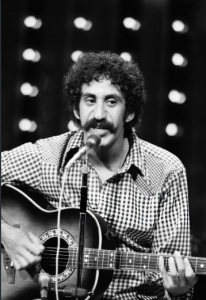
The Song Was Almost Too Personal to Be a Hit
When Croce recorded it, “Time in a Bottle” wasn’t treated like some enormous future classic.
It was simply one song on his 1972 album You Don’t Mess Around with Jim.
It wasn’t originally planned as a single.
Croce already had other songs getting attention.
His career was finally beginning to move.
But “Time in a Bottle” remained an album track.
And for a while, that’s all it was.
A quiet song written by a young father about wanting more time with his family.
Nobody knew how devastating its meaning would soon become.
Croce’s Career Finally Took Off
By 1972 and 1973, everything was beginning to change.
Croce had spent years struggling.
Now he was suddenly getting the success he had been waiting for.
Songs like “You Don’t Mess Around with Jim” and “Operator” brought him a growing audience.
Then came “Bad, Bad Leroy Brown.”
It became his first No. 1 hit during his lifetime.
The 30-year-old musician was finally becoming a star.
But success came with a price.
Croce was constantly on the road.
He was touring.
He was recording.
He was spending long stretches away from Ingrid and their young son.
And he was becoming increasingly exhausted by the lifestyle.
According to his official biography, Croce had been hoping to take a break from touring and spend more time with his family.
He had no idea how little time he actually had left.
Then Everything Changed in September 1973
On September 20, 1973, Croce performed at Northwestern State University in Louisiana.
He was only 30 years old.
After the concert, he boarded a chartered plane with several members of his crew, including guitarist Maury Muehleisen.
The plane crashed shortly after takeoff.
Nobody survived.
Jim Croce was gone.
He had been planning to step away from the road.
He had been thinking about spending more time with his family.
His son was almost two years old.
Croce never got the chance to watch him grow up.
And suddenly, the song he had written about wanting more time took on a meaning nobody could have predicted.
Then the Song Came Back
After Croce’s death, radio stations began playing “Time in a Bottle.”
Listeners heard the lyrics differently now.
The song had always been about wanting to slow life down.
But now the man singing it was gone.
The record company hadn’t originally planned to release it as a single.
But the demand became impossible to ignore.
So the song was released.
And something extraordinary happened.
It reached No. 1 on the Billboard Hot 100 in December 1973.
Croce wasn’t alive to see it.
He never heard the song become the biggest hit of his career.
It remained at No. 1 for two weeks.
The Timing Was Almost Impossible to Believe
Think about the timeline.
Croce wrote the song after discovering that his wife was pregnant.
His son was born in 1971.
Croce’s career finally began taking off.
He became a major recording artist.
Then, at just 30 years old, he died.
Only months later, the song he had written about wanting more time reached No. 1.
The man who wrote it never knew.
That’s what makes the song so haunting.
The lyrics weren’t written as a prediction.
Croce wasn’t expecting his life to end.
He was simply thinking about fatherhood.
He wanted to hold onto those moments.
He wanted to experience them again and again.
And after his death, listeners couldn’t help hearing something much darker in those same words.
His Son Grew Up With the Song
A.J. Croce was less than two years old when his father died.
He was too young to remember him.
But he grew up surrounded by his father’s music.
Eventually, A.J. became a musician himself.
He has spoken about the strange experience of having a father who wrote a famous song specifically for him, while never having the opportunity to truly know him.
That makes “Time in a Bottle” even more personal.
It’s not just a song about a father wanting more time with his son.
It’s a song written by a father who ultimately didn’t get that time.
Why the Song Feels Different Today
There are countless songs about love.
Countless songs about heartbreak.
Countless songs about losing someone.
But “Time in a Bottle” is different.
It’s about something everyone understands.
Time disappears.
You can’t stop it.
You can’t save it.
You can’t go back and collect the moments you didn’t appreciate enough.
When Croce wrote the song, he was thinking about his unborn son.
He was imagining all the years they would have together.
Birthdays.
Conversations.
Growing up.
Watching his son become a man.
He wanted to keep those moments forever.
But life doesn’t work that way.
The years pass whether you’re ready for them or not.
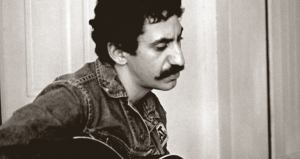
And That’s Why the Song Became Timeless
More than fifty years later, the song still carries the same message.
People hear it when they think about their children.
Their parents.
Their spouses.
People they’ve lost.
People they don’t see often enough.
And suddenly the song becomes personal.
Because everyone has someone they wish they could have more time with.
Maybe it’s a child who grew up too quickly.
Maybe it’s a parent who is no longer around.
Maybe it’s an old friend.
Maybe it’s someone you simply wish you had spent more time with.
Croce captured that feeling before he knew how much meaning it would eventually carry.
He Never Got to See What It Became
Jim Croce was only 30.
He had finally achieved the success he’d spent years chasing.
He had a young family.
He had plans.
He wanted to slow down.
And he had written a song about the simple wish to have enough time to enjoy the people he loved.
Then, suddenly, there was no more time.
A few months after his death, that song became a No. 1 hit.
Millions of people heard his voice.
Millions of people connected with his words.
But Croce never knew.
He never saw his son grow up.
He never saw “Time in a Bottle” reach the top of the charts.
He never knew how deeply the song would affect generations of listeners.
And perhaps that’s why it remains so powerful.
It was never really about predicting the future.
It was about appreciating the present.
A young father simply wanted more time with his family.
He wrote that feeling down.
And more than half a century later, people are still listening.
Still remembering.
Still wishing they could somehow save a little more time.
Because sometimes you don’t realize how precious time is until you realize you can never get it back.