Old School Music
He Was 25, His Record Career Was Failing, and He Had One Song to Prove He Belonged
In 1974, Bruce Springsteen was 25 years old and nowhere near the superstar people would eventually know.
He had already released two albums.
Critics liked them.
But the public wasn’t buying them in large numbers.
His record company was becoming less patient.
And Springsteen knew his next record mattered.
A lot.
He wasn’t trying to write just another rock song.
He wanted to make something enormous.
Something that sounded like the greatest rock record he had ever heard.
And the song he was working on would eventually become the title track of the album that changed his career forever.
The song was “Born to Run.”
But when Springsteen first started writing it, he had no idea how important it would become.
It Started With a Phrase
The words “Born to Run” came to Springsteen while he was lying in bed at his home in New Jersey.
The phrase immediately created an image in his mind.
A young person trapped somewhere they didn’t want to remain.
A car.
A highway.
A girl.
A chance to escape.
Springsteen later described the song as being about stepping into the unknown.
He was young himself.
He was searching for his own direction.
And that feeling became the foundation of the song.
But there was a problem.
Springsteen didn’t want the song to sound ordinary.
He wanted it to feel huge.
He was influenced by the massive productions of Phil Spector, as well as the rock and roll he had grown up listening to.
He wanted guitars, piano, saxophone, drums, strings and vocals all pushing forward together.
He wanted the listener to feel like they had been thrown into the middle of the story.
And he became obsessed with getting it right.
Six Months for One Song
This is where the story gets crazy.
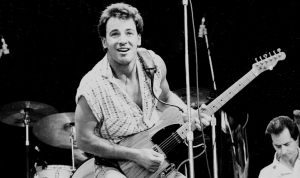
Springsteen spent roughly six months working on “Born to Run.”
The recording process became incredibly complicated.
He kept adding parts.
Then changing them.
Then recording them again.
Multiple guitars.
Piano.
Bass.
Drums.
Saxophone.
Strings.
Percussion.
Background vocals.
Everything was being layered on top of everything else.
The goal was to create the giant, overwhelming sound he had imagined in his head.
The studio equipment itself wasn’t designed for what Springsteen was trying to accomplish.
The recording eventually involved dozens of separate instrumental tracks being combined into a machine capable of handling far fewer tracks at once.
Springsteen was effectively building the song piece by piece.
And he was becoming known for something that would follow him throughout his career:
perfectionism.
He wasn’t satisfied with simply having a good song.
He wanted the recording in his head.
Exactly.
And His Career Was Still Hanging in the Balance
While Springsteen was obsessing over the recording, there was a much bigger issue.
His first two albums hadn’t sold enough.
The critical praise was there.
The live reputation was growing.
But commercially, things weren’t working.
Springsteen had been signed to Columbia Records with enormous expectations.
By 1975, the pressure surrounding his third album was serious.
The label needed evidence that continuing to invest in him made sense.
Springsteen needed a breakthrough.
And “Born to Run” became the song that could potentially provide it.
Then something unexpected happened.
The song started circulating before the album was even finished.
Springsteen’s manager, Mike Appel, sent an early version to radio stations.
Some DJs began playing it.
The reaction started building.
People were hearing this enormous, urgent rock song from an artist who, until then, had been known mostly to dedicated fans and critics.
Suddenly, something was happening.
Then Came the E Street Band
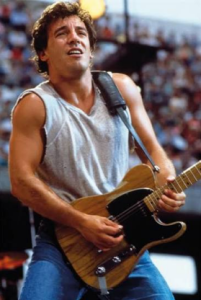
The recording also became an important moment in the development of the E Street Band.
The lineup was changing around Springsteen.
Roy Bittan joined on piano.
Max Weinberg became the drummer.
Clarence Clemons remained the towering presence on saxophone.
Danny Federici played keyboards.
Garry Tallent handled bass.
Together, they created the sound that would become inseparable from Springsteen’s music.
And Clarence Clemons’ saxophone became one of the song’s defining sounds.
That saxophone doesn’t simply appear in the background.
It feels like another character entering the story.
The whole recording moves like it’s trying to outrun something.
The Song Wasn’t Really About Having Somewhere to Go
That’s what makes “Born to Run” more interesting than simply being a song about cars and young people leaving town.
It’s about escape.
But it’s also about uncertainty.
The characters don’t necessarily know what comes next.
They just know they can’t stay where they are.
Springsteen later described the difference between “Born to Run” and some of his later songs as the difference between searching for a place and actually standing somewhere.
At the time, he was young and searching himself.
The song captured that feeling perfectly.
You don’t have the answers.
You don’t know exactly where you’re going.
But you believe there has to be something beyond the place you’re standing in.
And you’re willing to take the risk to find it.
August 25, 1975
Then the album finally arrived.
Born to Run was released on August 25, 1975.
The title track was the centerpiece of everything Springsteen had been trying to accomplish.
And the gamble worked.
The album eventually reached No. 3 on the Billboard 200.
The single became Springsteen’s first Top 40 pop hit.
On October 11, 1975, “Born to Run” reached the Top 40, marking the beginning of his transformation from a largely regional cult figure into an internationally recognized rock star.
Then came something almost unbelievable.
Springsteen appeared on the covers of Time and Newsweek in the same week.
The 25-year-old musician who had struggled to sell his first two albums was suddenly one of the biggest stories in American music.
Everything had changed.
But Listen to the Song Again
That’s the fascinating part.
“Born to Run” doesn’t sound like a victory song.
Not really.
It sounds desperate.
It sounds hungry.
It sounds like someone who knows the clock is ticking.
The characters aren’t celebrating because they’ve already escaped.
They’re trying to escape.
They’re hoping.
They’re driving.
They’re taking one last chance.
And that’s probably why the song connected with so many people.
Because growing up isn’t always about knowing exactly where you’re going.
Sometimes it’s simply knowing that you can’t stay where you are.
The Album Became Something Much Bigger
The success of Born to Run didn’t just give Springsteen a hit.
It gave him the freedom to continue.
The album reached No. 3 in the United States and eventually became a major part of American musical culture. It was added to the National Recording Registry in 2003 for its cultural, historical and artistic significance.
And the title track became one of Springsteen’s defining songs.
Decades later, people still hear those opening moments and immediately recognize what’s coming.
The drums.
The guitars.
The piano.
The saxophone.
Then Springsteen’s voice.
And suddenly you’re back on that highway.
More Than 50 Years Later
The remarkable thing about “Born to Run” is that the feeling hasn’t really aged.
The cars changed.
The clothes changed.
The towns changed.
The technology changed.
But that feeling didn’t.
The feeling of being young and wanting something more.
The feeling of looking at the life around you and wondering whether there is something beyond it.
The feeling of knowing that staying safe might mean staying stuck.
Springsteen was only 25 when he captured it.
He didn’t know where his own career was going.
His first two albums hadn’t broken through.
His record company was questioning the investment.
And he was spending months obsessing over one song.
But he kept working.
He kept rewriting.
He kept recording.
And eventually, that song became the one that changed everything.
A 25-year-old musician trying desperately to make his name had written an anthem about people desperate to escape their circumstances.
And perhaps that’s why it still feels so powerful.
Because “Born to Run” was never really about having the destination figured out.
It was about having enough courage to get on the road anyway.
And Bruce Springsteen was doing exactly the same thing.