
Old School Music
The Song Born From a Miserable Winter in New York
She was miserable, freezing in New York, and dreaming about another life.
Then her husband turned her homesickness into a song—and it became one of the most recognizable songs of the 1960s.
She Had Never Experienced a New York Winter
In 1963, Michelle Phillips was only 19 years old.
She had recently married John Phillips, and the couple had moved from California to New York while pursuing a career in folk music.
For Michelle, the change was brutal.
She was from Long Beach, California. She had never experienced a New York winter before, and she later remembered being miserable in the cold.
The couple were living near Washington Square, and Michelle desperately missed the warmth and sunshine of home.
Then one winter day, something happened that would eventually become part of music history.
Michelle went into St. Patrick’s Cathedral while John waited outside.
That small moment gave John an idea.
A few weeks later, he woke Michelle in the middle of the night with his guitar.
He already had the beginning of a song.
The Song Was Born in the Middle of the Night
John had written the opening lines about the cold weather and his desire to be somewhere warm.
Michelle remembered being half asleep when he woke her.
But instead of simply telling her to go back to sleep, John wanted her help finishing the song.
Michelle eventually contributed additional lyrics, including the section inspired by her visit to the cathedral.
John initially didn’t like those lines.
But he didn’t have anything better.
So they stayed.
And those lyrics became one of the most recognizable parts of the finished song.
The couple had unknowingly captured something bigger than their own situation.
It wasn’t simply about California.
It was about wanting to escape somewhere.
Somewhere warmer.
Somewhere happier.
Somewhere that felt like home.
Then Someone Else Recorded It First
The song didn’t immediately become a Mamas & the Papas recording.
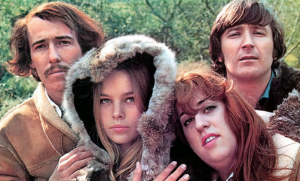
John and Michelle eventually became part of the group alongside Denny Doherty and Cass Elliot.
They had a connection to singer Barry McGuire, who helped introduce them to producer Lou Adler.
McGuire recorded the song first.
And the future Mamas & the Papas provided backing vocals on his version.
But when Adler heard the recording, he noticed something.
The backing singers had something special.
Their voices worked together.
The harmonies were different.
And suddenly, Adler had another idea.
Why give the song to someone else?
Why not make it the Mamas & the Papas’ record?
One Change Transformed the Recording
The basic instrumental track had already been recorded for McGuire.
Instead of throwing everything away and starting from scratch, the production team kept much of that existing track.
Then they removed McGuire’s lead vocal.
Denny Doherty stepped in and recorded the new lead.
The group’s harmonies remained part of the arrangement.
And then one more unexpected ingredient was added.
A flute.
Jazz musician Bud Shank was brought into the studio to fill a space in the arrangement.
He played the now-famous alto-flute solo, giving the recording one of its most distinctive sounds.
The result was something completely different from an ordinary folk recording.
It sounded dreamy.
Wistful.
Almost cinematic.
And the contrast was perfect.
The lyrics described a cold, gray winter.
But the music made you feel like California was just beyond the horizon.
The Record Almost Disappeared
The song was released in December 1965.
And at first, it didn’t explode.
Michelle Phillips later remembered hearing it on the radio only occasionally.
Then something changed.
The record began gaining momentum in Boston.
From there, it spread.
Suddenly, stations around the country were playing it.
And the song that had started with one homesick woman in a cold New York apartment was becoming a national hit.
It eventually reached No. 4 on the Billboard Hot 100.
The Mamas & the Papas had their breakthrough.
The Sound of a Generation
The song arrived at exactly the right moment.
America was changing.
Young people were moving toward California.
The counterculture was growing.
And the idea of California represented something larger than geography.
It meant sunshine.
Freedom.
A different life.
A fresh start.
The song captured that feeling without ever needing to explain it.
You simply heard those opening words and immediately pictured a gray winter.
Then came the harmonies.
And suddenly, you were somewhere else.
The Rock & Roll Hall of Fame later described the song as embodying the idealized California that attracted so many people during the 1960s.
There Was Another Story Behind the Recording
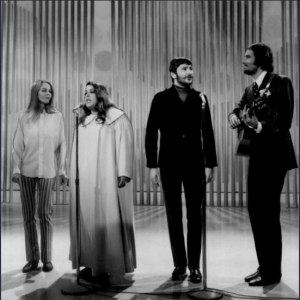
One of the most interesting things about the song is that the famous version wasn’t built from scratch.
It was essentially transformed from a recording originally made for another artist.
Barry McGuire had recorded the basic track.
The future Mamas & the Papas had already contributed background vocals.
Then Lou Adler heard the potential.
Denny Doherty replaced McGuire’s lead.
Bud Shank added the flute.
And suddenly, the song belonged to the Mamas & the Papas.
It was a strange path for one of the most recognizable records of the decade.
The Song Was More Personal Than People Realized
For Michelle, the song wasn’t some abstract idea about California.
She really was homesick.
She really was cold.
She really did miss the place where she had grown up.
And her husband took those feelings and turned them into music.
Years later, Michelle remembered how strange it was to realize that something they had written almost casually had become such a huge record.
She said they didn’t initially recognize it as a masterpiece.
To them, it was simply another good song.
Then the world heard it.
And everything changed.
More Than 60 Years Later
The song has long since outgrown the circumstances that created it.
You don’t have to live in New York to understand it.
You don’t have to dream about California.
You don’t even have to remember the 1960s.
The feeling is universal.
Sometimes you’re somewhere you don’t want to be.
Sometimes you miss home.
Sometimes you look outside at a cold, gray day and imagine somewhere warmer.
That’s what John and Michelle captured.
A feeling of wanting to be somewhere else.
And somehow, they turned that feeling into a song that millions of people would carry with them for generations.
More than six decades later, those opening harmonies are still instantly recognizable.
The woman who was miserable in a New York winter became the inspiration for a song that made an entire generation dream about California.
And that’s why this isn’t really just a song about a place.
It’s a song about wanting to go home.