
Old School Music
The Rule Said She Couldn’t Fight. Then Reality Proved It Wrong.
She wasn’t legally allowed to serve in combat. She ended up doing it while wounded and hanging off the skid of a helicopter, firing at the enemy as it carried her crew to safety. Her name is Mary Jennings Hegar, and in the summer of 2009, the gap between what the rulebook said and what was actually happening in Afghanistan snapped shut around her. On paper, the situation made a strange kind of sense. Women in the U.S. military could fly combat search-and-rescue missions over a war zone, but they were officially barred from many direct ground-combat roles. It was the sort of contradiction that looked tidy in a Pentagon memo and dissolved completely the moment real bullets were in the air. Hegar was already living inside that contradiction. She had finished at the top of her pilot training class and was on her third tour, flying an HH-60 Pave Hawk on missions to pull wounded people out of places nobody wanted to be.
On July 29, 2009, the call came in near Kandahar. There were patients to recover, and the pickup zone was under heavy fire. Everyone aboard understood what “hot” meant. They flew in anyway. As they moved in, the ground lit up. Taliban fighters opened fire on the aircraft. The windshield took hits, metal and glass came apart in the cabin, and Hegar was struck, taking wounds to her arm and leg. Blood soaked through her flight suit. There was no time to stop and think about it. The patients still had to get aboard, so the crew loaded them under fire and hauled back into the sky. For a moment, it looked like they’d made it out. Then another burst of enemy fire tore into the helicopter and crippled it. The aircraft was going down. They put it down a few miles from where they’d been hit, now stranded on the ground in a dangerous area with wounded aboard and hostile forces nearby.
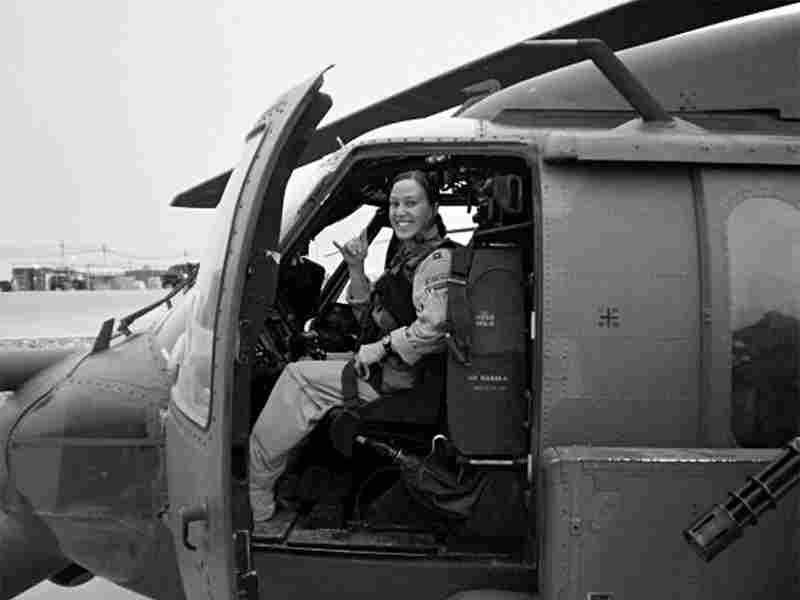
Here is the part most people don’t know, the part that turns a bad day into a remarkable story. Two U.S. Army Kiowa scout helicopters came for them. Kiowas are small; there was no room inside for everyone. So the crew and their patients did the only thing left to do. They climbed onto the skids on the outside of the helicopters and held on. As those overloaded aircraft lifted off and flew away, Hegar, already wounded and hanging onto the exterior of a helicopter in open air, returned fire toward the enemy to help protect the people she was with. They made it out. Everyone she was responsible for survived.
For that, she received the Purple Heart and the Distinguished Flying Cross with Valor, a decoration recognizing extraordinary heroism in the air. She is often cited as only the second woman in history to earn the Distinguished Flying Cross with Valor, after Amelia Earhart. By any measure, she had faced extraordinary danger and responded with exceptional courage.
And here is where her story takes the turn that surprised even people who admired the rescue. The crash left her with a serious back injury that ended her career as a pilot. Grounded, she wanted to keep serving in a role that fit her skills and experience, including positions that were then restricted to women because of military policy. But the same restrictions that limited where women could serve now stood in her way. The contradiction was impossible to ignore. She had already flown into dangerous conditions, rescued people under fire, and helped defend her crew during an emergency, yet the rules still treated certain military roles as beyond the reach of women.
So she took on a second fight, this time against the policy itself. In 2012, Hegar became one of the lead plaintiffs in a landmark lawsuit challenging the Pentagon’s restrictions on women serving in combat roles. Her point was straightforward: military positions should be determined by ability and qualifications, not gender. If someone could meet the standards required for a job, they should have the opportunity to serve. The pressure helped accelerate change. In 2013, the Secretary of Defense announced plans to lift the restrictions, and by 2016, the U.S. military had opened hundreds of thousands of previously restricted combat-related positions to women.
Think about the arc of that. A woman flew into danger to save others, was wounded during the mission, and then returned home to challenge the very policy that had limited where women could serve. Her fight helped open opportunities for countless women who came after her. She later told her story in a bestselling memoir, but the heart of it was there above Kandahar and in the legal battle that followed. Courage isn’t only the willingness to fly into danger. Sometimes it’s the willingness to come home and challenge the system when it refuses to recognize what you’re capable of. The rules said there were places she wasn’t supposed to be. Reality had already proven otherwise.