
Old School Music
She Flew Into the Wind… and Disappeared Into History
She had been in the air for almost a full day. Alone. Over three thousand miles of dark, freezing ocean, flying into a headwind that had defeated better-equipped pilots before her.
Then the engine began to die.
On September 5, 1936, Beryl Markham’s small turquoise-and-silver monoplane, The Messenger, came down nose-first into a peat bog at Baleine Cove on Cape Breton Island, Nova Scotia. Ice had clogged the fuel-tank vents and starved the engine within sight of land. She struck her head, was briefly knocked unconscious, and climbed from the wreck with a gash across her forehead and black peat covering her knees. She had missed New York. She had not missed history.
Beryl Markham had just become the first woman to fly solo across the Atlantic from east to west — against the prevailing winds, the harder direction — and the first person to fly nonstop and alone from England to North America. Amelia Earhart had crossed the same ocean four years earlier, but with the prevailing winds behind her. Markham flew directly into them.
To understand how a woman ended up alone over the Atlantic in 1936, you have to go back to a farm in colonial Kenya.
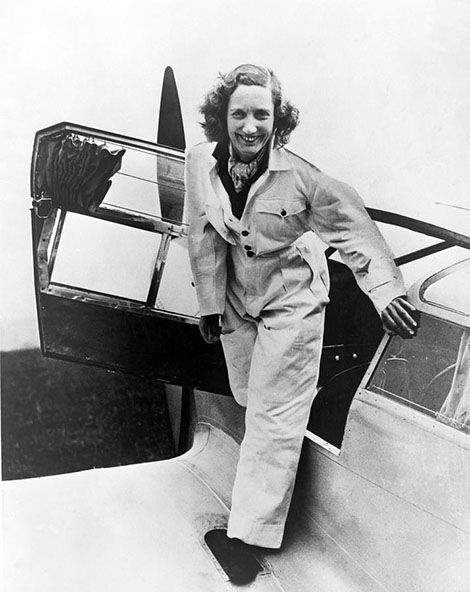
She was born Beryl Clutterbuck in England on October 26, 1902. When she was four, her father moved the family to Njoro, near Kenya’s Great Rift Valley, to farm and train horses. Her mother lasted barely a year before returning to England. Beryl stayed. Her father raised her in that open country, and the country shaped her in return.
Her first language was Swahili. She spent much of her childhood outdoors alongside local children, including a close friend named Kibii, and learned to ride, hunt, and navigate the countryside from an early age. As a girl, she survived an attack by a neighbor’s lion. This was not a sheltered childhood. It was a demanding and unusual one, and it helped forge the resilience that would define her later life.
Then, at sixteen, everything changed. Her father’s farm struggled under drought and economic upheaval that left many landowners in serious debt. He eventually sold the property and left for Peru to work as a horse trainer. Before leaving, he arranged a marriage between Beryl and a much older neighbor, Jock Purves. In her memoir, she described the experience as having been given away. She was sixteen, and suddenly living in a marriage she had not chosen.
Here is what most people miss: Beryl Markham’s courage did not begin in a cockpit. It began when a teenage girl, facing circumstances she had never chosen, decided she would build a life on her own terms. At nineteen, she became the first woman licensed as a professional racehorse trainer in Kenya. She started with very little: a few horses her father had left behind, a modest stable, and a simple place to live. She competed against experienced male trainers, many of them much older than she was, and quickly proved herself. In 1926, a mare she trained named Wise Child won the St. Leger, one of the colony’s prestigious races, only weeks after Beryl took over the horse. The young woman who had been pushed into an unwanted future had created a successful career for herself.
She eventually left that marriage and kept moving forward. Somewhere along the way, she looked beyond the horses and the red earth and discovered the thing that would define the next chapter of her life: the sky.
She learned to fly in the early 1930s, trained by British pilot Tom Campbell Black, and became one of Kenya’s early bush pilots. She flew mail, supplies, and passengers across a country with very few developed airfields, landing on rough strips and open ground. She also used aircraft to scout elephant herds for safari expeditions, locating animals across vast stretches of savannah and communicating their positions. She learned to understand aircraft and weather with the same calm attention she had once brought to horses — staying focused when conditions became unpredictable.
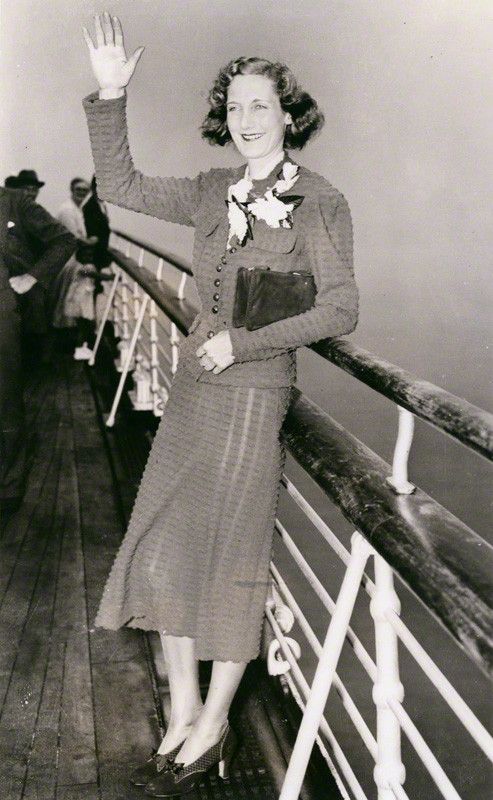
By 1936, she was ready to attempt something few solo pilots had managed. Flying the Atlantic from east to west meant fighting the prevailing winds, consuming more fuel, battling exhaustion, and facing the ocean alone if anything went wrong. She had no modern navigation systems and no second engine to rely on. On the evening of September 4, she took off from Abingdon, Oxfordshire, in a Percival Vega Gull, heading for New York. For roughly twenty-one hours she flew through fog, rain, and sleet, alone above the ocean. When ice eventually blocked her engine, she was over Nova Scotia — close enough to survive the crash and walk into aviation history.
The story did not end in that bog. Markham eventually returned to Kenya and to horse racing, and the winners continued to come; horses she trained won the East African Derby, the region’s most prestigious race, six times. In 1942, she published a memoir of her life and flying career, West with the Night. It initially sold poorly and was largely forgotten for decades. Then, in the 1980s, the book was rediscovered, helped in part by renewed interest in an old letter from Ernest Hemingway, who had read it years earlier and praised the quality of the writing. The memoir was reissued and eventually sold more than a million copies, transforming a forgotten book into a celebrated classic.
Beryl Markham died in Nairobi in 1986, at the age of eighty-three, in the country that had shaped so much of her life. She had faced circumstances that could easily have limited her choices, yet she spent the rest of her life challenging expectations — one race, one flight, and one ocean at a time.
The people who choose to fly against the wind are rarely the ones the world expected to see in the sky.